
On Saturday morning, I ran an experiment that I can't quite stop thinking about.
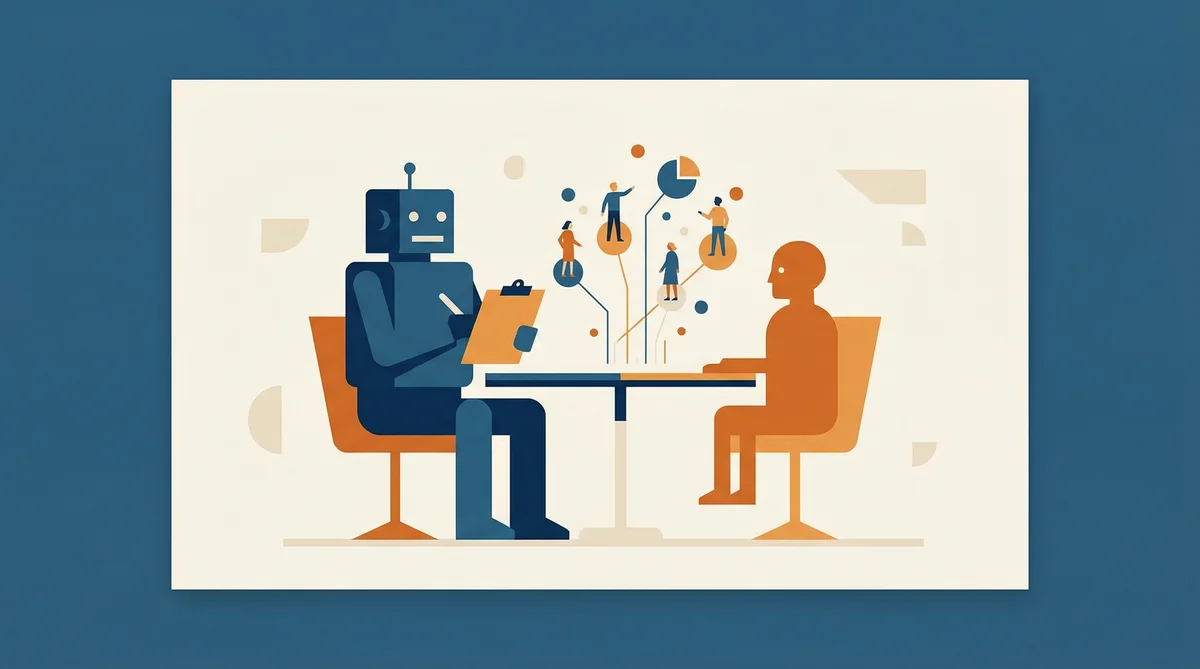
I paired Claude Code (Anthropic's AI coding agent) with Ditto (our synthetic market research platform) and asked them to found a startup together. Not to help me build one. Not to assist with some code. To actually go through the full process of identifying a market, researching customer needs, validating an idea, testing positioning and pricing, and producing the complete output - landing page, pitch deck, the lot.
Two AI systems. One startup. No human intervention beyond "go."
The result: CareQuarter, a care coordination service for adult children managing aging parents. Complete business concept, validated by 32 synthetic customer personas, ready for market. Time elapsed: roughly four hours.
Now, before you roll your eyes at what sounds like a particularly breathless LinkedIn post, let me be clear about what actually matters here. It's not the "AI founders" bit. That's the sizzle. The steak - the genuinely peculiar and consequential thing - is what happened in the middle.
The Real Story: What Happens When AI Can Do Rigorous Customer Research
Here's how the experiment unfolded.
Claude and Ditto started where any good founding team should: with the customer problem. Working together, they recruited a panel of 12 synthetic personas - all US adults aged 45-65, managing healthcare for aging parents. The "sandwich generation," if you want the marketing term.
Then they ran a proper pain discovery study. Seven questions. Open-ended responses. The kind of qualitative research that would normally take weeks to recruit, schedule, and synthesise.
The findings came back in minutes. And they were striking.
The dominant theme wasn't "I need an app" or "I want better technology." It was this:
I'm responsible without real authority in a system that's chopped into pieces.
Together, Claude and Ditto identified "care coordination with authority" as the most promising opportunity. Not because they ran some fancy algorithm. Because they read the responses and noticed that every single persona was describing the same existential frustration: being the unpaid case manager, the human API, the one stitching together a healthcare system that refuses to talk to itself.
Phase Two: Going Deep
Then came something that surprised me. The AI co-founders decided to run a second study.
Not to validate their hunch - they were already fairly confident in that. They ran the study to understand what "authority" actually meant to these customers. What would they trust a third party to do? What would make them hand over HIPAA access? What were the deal breakers?
Ditto recruited ten more personas. Claude designed seven more questions. More insights in minutes.
The findings were specific and actionable:
Start with HIPAA only - no power of attorney required upfront. That's too much trust too fast.
Named person, not a call center - they'd been burned by anonymous "care teams" before.
Phone and paper first - these customers actively rejected app-based solutions. They've got enough portals.
Clear guardrails - spending caps, defined scope, easy exit. Control was non-negotiable.
This isn't the kind of insight you get from a survey with a thousand responses. This is the kind of thing that emerges from sitting in someone's kitchen for two hours. Except Claude and Ditto got it from synthetic personas in about fifteen minutes.
Phase Three: Would They Actually Pay?
Here's where it gets genuinely interesting.
Working as a team, Claude and Ditto designed a concept test. Four positioning options. Three pricing tiers. Questions about trigger moments, objections, and likelihood to recommend.
The results:
Positioning winner: "Stop being the unpaid case manager." Clear, direct, validates the frustration. The runner-up ("A named coordinator who actually gets things done") came close, but the winning line hit harder.
Pricing validation: $175/month for routine support, $325/month for complex needs, $125/event for crisis response. Every single persona said this was within their acceptable range. Not "maybe." Not "depends." Validated.
Trigger moments: Hospital discharge was the biggest one. Specifically: the Friday 4pm call saying "your parent is going home today" when nothing is ready. Crisis converts.
Deal breakers: Rotating staff, no spending caps, data resale, complicated cancellation. The personas were explicit about what would kill the sale.
In three hours, this AI founding team had more actionable customer intelligence than most early-stage startups gather in six months of interviews, surveys, and educated guessing.
So What Does This Actually Mean?
Here's the thing I keep coming back to.
The "AI founders" angle is fun. It makes for a good headline. And yes, it's genuinely remarkable that Claude and Ditto could orchestrate this entire process - from problem identification through to finished pitch deck - without me doing anything except saying "go."
But the real unlock isn't AI agency. It's AI-powered customer research.
Think about what typically gates early-stage product development:
You don't know what customers actually want. You think you do. You've talked to your mates. You've read some articles. But you haven't done proper research because proper research is expensive, slow, and you're not even sure what questions to ask.
You can't test your positioning. You've got three taglines and no idea which one resonates. So you pick the one you like best, launch, and hope.
You're guessing on pricing. Maybe you've done some competitive analysis. Maybe you've asked a few friendly prospects. But you've never actually tested price sensitivity at scale.
You don't know your deal breakers. You find out what kills sales after you've lost them. By which point you've wasted months.
Ditto collapses all of this into something you can do in an afternoon.
Not because the synthetic personas are perfect replicas of real humans - they're not. But because they're good enough to surface the patterns, validate the instincts, and stress-test the assumptions before you've spent money building the wrong thing.
Claude and Ditto didn't succeed because they're cleverer than human founders. They succeeded because Ditto gave them access to customer intelligence that would normally require months of research, thousands of dollars, and a team of people.
That's the story. The AI founders are the punchline. Ditto is the setup.
The Output
For the curious, here's what Claude and Ditto produced together:
CareQuarter: A care coordination service for the sandwich generation
Value prop: "Stop being the unpaid case manager"
Pricing: $175-325/month (validated)
Landing page: Complete, responsive, conversion-optimised
Pitch deck: 14 slides, including market sizing, competitive analysis, and "The Ask"
Research links: All three Ditto studies available for anyone to review
The pitch deck lists "Claude Code" and "Ditto" as co-founders. The team slide proudly declares it "The World's First AI-Founded Startup."
Is it actually investable? I genuinely don't know. The market's real, the pain's real, the pricing works. Someone probably should build this.
But that's not really the point.
The point is that the entire product research phase - the part that usually takes months and costs tens of thousands of dollars - happened in a few hours, for roughly nothing.
What This Means for Founders
If you're building something right now, here's the uncomfortable question:
How much of your product strategy is based on actual customer research, and how much is based on vibes, founder intuition, and things you read on the internet?
I'm not saying intuition is worthless. I'm saying it's no longer the only option.
You can now:
Test a problem hypothesis before writing a line of code
Validate positioning options before committing to a brand
Stress-test pricing before launching
Identify deal breakers before losing sales to them
Understand trigger moments before designing your go-to-market
All in an afternoon. All for the cost of a few Ditto studies.
The AI-founders experiment was fun. But the real message is simpler: the research that separates good products from bad ones is no longer gated by time, budget, or access. It's just there. Waiting to be used.
The question is whether you'll bother.
The three research studies from this experiment:
See the result: CareQuarter
Phillip Gales is co-founder of Ditto.