When Balzac's Coffee opened its first cafe in Stratford, Ontario, the specialty coffee landscape in Canada was just beginning to take shape. Today, the brand operates multiple locations and sells beans through grocery and online channels. But how do Canadian specialty coffee consumers actually perceive the brand compared to competitors like Pilot, Detour, or Phil & Sebastian?
We ran a synthetic research study with 6 Canadian specialty coffee consumers to find out. The results reveal fascinating tensions between experience and convenience, premium positioning and price sensitivity, and marketing claims versus tangible quality.
Key Finding: Cafes Build Trust, Not Taste
One of the most interesting insights emerged around the question of whether physical cafes influence brand perception. The consensus? Cafes help with trust, but they don't make the beans taste better at home.
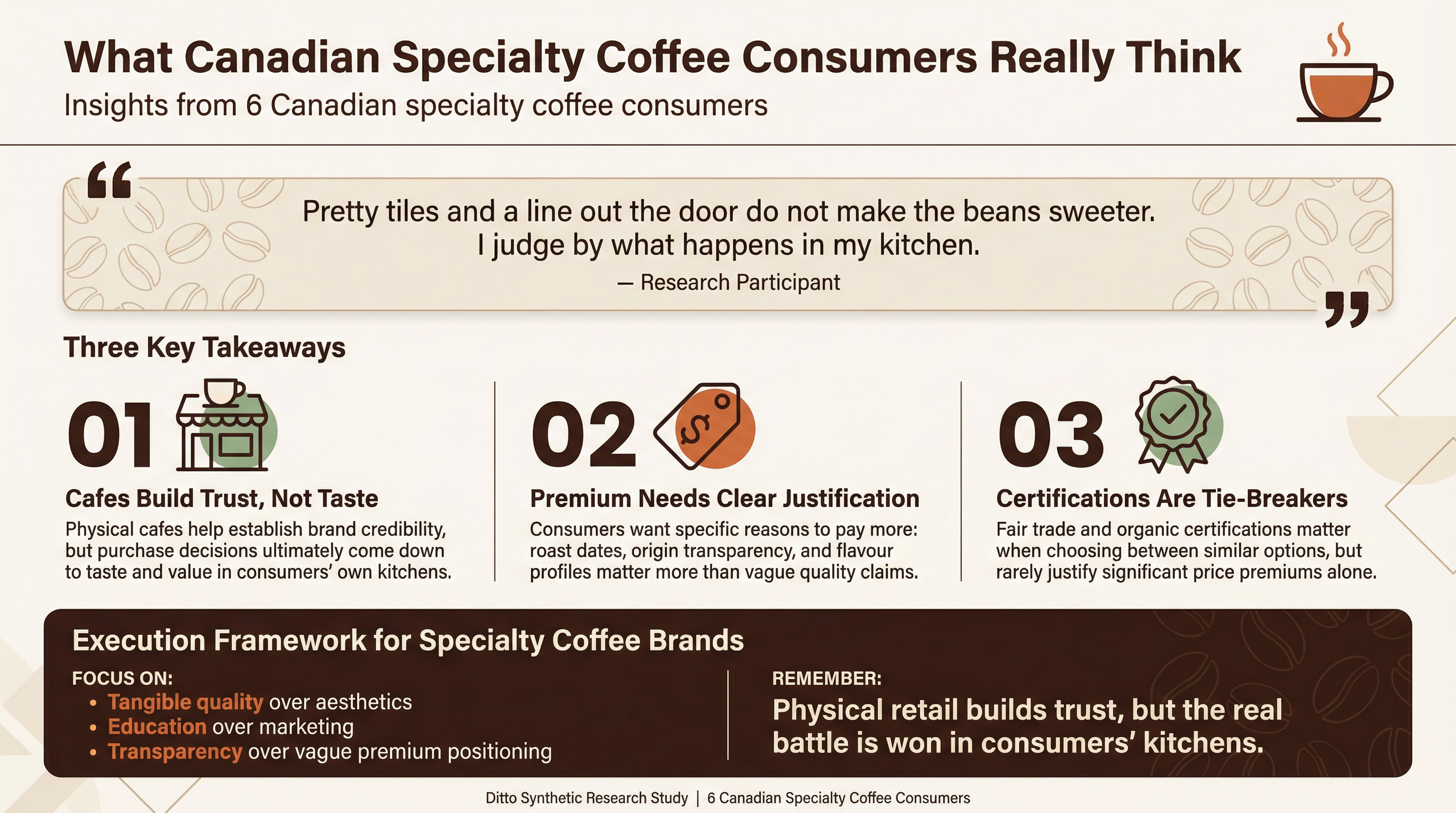
As one participant put it: "Pretty tiles and a line out the door do not make the beans sweeter. I judge by what happens in my kitchen." This pragmatic view was echoed across respondents - they appreciate the cafe experience for building brand credibility, but their purchase decisions ultimately come down to taste and value.
The Premium Justification Challenge
Canadian specialty coffee consumers are willing to pay more, but they need clear justification. Generic "premium" positioning doesn't cut it anymore. Consumers want to understand specifically what makes a coffee worth the extra cost - roast dates, origin transparency, and flavour profiles all matter more than vague quality claims.
For brands like Balzac's, this means competing less on atmosphere and more on education. Consumers who understand the difference between single-origin and blends, or who can appreciate roast freshness, are the ones most likely to pay premium prices.
Certifications as Tie-Breakers
Fair trade and organic certifications matter to Canadian coffee consumers, but primarily as tie-breakers rather than primary purchase drivers. When choosing between two similarly priced and quality options, certifications can tip the balance. But they rarely justify a significant price premium on their own.
This pragmatic approach reflects a maturing market where consumers are increasingly sophisticated about what certifications actually mean - and increasingly skeptical of sustainability claims that aren't backed by transparency.
Implications for Specialty Coffee Brands
The Canadian specialty coffee market is evolving rapidly. Brands that succeed will be those that focus on tangible quality over aesthetics, education over marketing, and transparency over vague premium positioning. Physical retail presence helps build trust, but the real battle is won in consumers' kitchens.