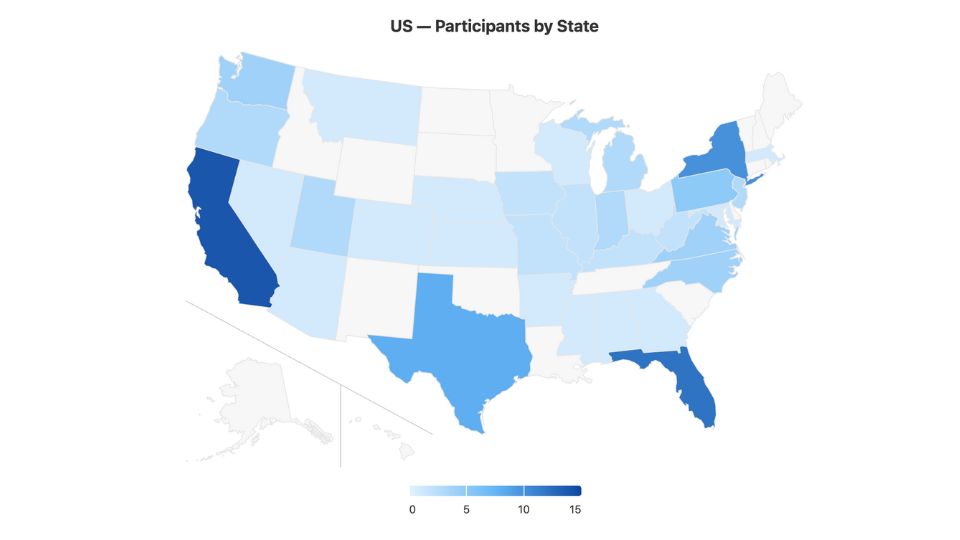
We asked 500 synthetic Americans—calibrated synthetic personas spanning ages 21 to 88, from Erie to San Diego, from students to retirees—one open question: What do you want for 2026, and how will you get there?
No multiple choice, no forced ranking, just open text.
The responses were messy, specific, and bracingly honest. They showed something traditional research consistently misses: what people actually care about when nobody's trying to sell them anything.
The Macro Story: Stability in an Unstable World
If 2026 has a theme, it's this: people are battening down the hatches.
Across age groups, income levels, and geographies, the overwhelming priority is building resilience:
Financial buffers: Emergency funds, mortgage payoffs, killing credit card debt. Not aspirational wealth, just enough cushion to sleep at night.
Home hardening: Attic insulation, weatherstripping, gutter guards, backup generators. Practical prep for increasing storms, power outages, and rising utility bills.
Health baselines: Walking goals, blood pressure targets, PT stretches. Not Instagram transformations, just bodies that don't hurt.
Skill stacking: Certifications, licenses, cross-training. Portable credentials that survive layoffs.
The tone is disciplined, almost defiant. "No fluffy goals." "Receipts, not vibes." "Boring on purpose."
This isn't optimism. It's pragmatism.
The Details That Surveys Miss
Here's what makes synthetic research different: the texture.
Traditional surveys would tell you "67% of respondents plan to increase emergency savings in 2026."
Synthetic research tells you:
A 40-year-old project coordinator in Athens is "pushing the emergency fund from ~2 months to 6 months by October" and plans to "kill the lingering $6k student loan by June" by redirecting her tax refund and selling "5 larger items we do not use."
A 26-year-old security analyst in Norfolk wants "a 9-month emergency fund around 25k" and will "automate transfers the day distributions hit, keep Rocket Money pruning dead subscriptions, and let the Tacoma keep me honest about big purchases."
A 60-year-old volunteer coordinator in San Antonio plans to "pay the lingering medical bills by May and keep a zero balance on the card by March" with "auto-transfer $150 every payday, tax refund straight to savings, and my ledger gets green highlighter for savings, red for any dumb spending that tries to sneak in."
Same goal. Three completely different strategies, constraints, and motivations.
Traditional research aggregates. People become percentages. Nuance becomes noise.
Synthetic research preserves. You see how a goal fits into a life—the trade-offs, the backup plans, the emotional weight.
What Shows Up When You Don't Ask
Some of the richest signal came from things we didn't ask about:
The Subscription Purge
Over and over: "cut dead subscriptions," "kill any subscription that's annoying to cancel," "no new subscriptions, period."
Subscription fatigue isn't just a pricing complaint. It's a control issue. People feel nickel-and-dimed, tracked, and locked into recurring charges they forgot they authorized.
A 26-year-old in Greensboro: "No hidden fees, no 'free trials' that bite later."
A 52-year-old in Fresno: "If a service wants a monthly charge or a 'free trial,' I say no. I will buy what I need up front and save the receipts."
This isn't price sensitivity. It's subscription hostility. And if your product lives on autopay, you're working against the tide.
The News Diet
Another unbidden theme: deliberate news restriction.
"Cap news to 30 minutes a day."
"Timer on, then I switch to a DIY video."
"No doomscrolling after dinner."
"The war stuff and China-Taiwan stories make my chest tight. I'm setting a 10-minute timer for news at lunch only."
This isn't apathy. People are actively managing their information diet to protect their mental health and sleep.
If your marketing strategy relies on breaking through via news feeds or current-events hooks, you're targeting people who are deliberately tuning out. You're competing with their mental-health strategies.
The Return of Cash Envelopes and Paper Calendars
In an AI-saturated world, analog systems are making a comeback:
"Envelopes for gas and groceries."
"Put it on my paper calendar."
"Keep receipts in the shoebox."
"Fridge calendar so it doesn't 'mysteriously' get forgotten."
Why? Because digital is leaky. Apps send notifications. Subscriptions auto-renew. Budgets live behind login screens.
Paper is tangible, inert, and trusted. When stakes are high—money, health, family logistics—people revert to systems they can see and touch.
The Life-Stage Segmentation Nobody Uses
One of the sharpest insights: age is a weak proxy for priorities.
Consider three people in their early 40s:
41-year-old security analyst, San Antonio:
Focused on dadding (Yellowstone road trip with Harper, phone-down rule), health (deadlift 365, ruck 5 miles), and buying a house in a good school district by Thanksgiving.
40-year-old project coordinator, Athens:
Pushing hard on career (finish bachelor's degree, pass CAPM, move to Project Manager by Q4), while managing two kids, a new house, and prepping emergency go-bags "because the news is a mess."
40-year-old logistics coordinator, San Jose:
Juggling a forklift cert, side hustle (meal-prep business), and saving for her daughter's camp—all while dealing with random back pain and keeping weeknight takeout to zero.
Same age. Completely different lives. Different stressors, different time horizons, different purchase triggers.
Traditional segmentation: "Adults 35-44, HHI $50-75k."
Reality: Three distinct humans with incompatible needs who would respond to completely different messaging.
Synthetic research doesn't flatten this. It preserves the heterogeneity that drives real-world behavior.
What Marketers Get Wrong About "Aspiration"
If you're selling aspiration in 2026, you're selling to a shrinking market.
Look at the language:
"No vision board nonsense."
"No hustle-culture fluff."
"Boring on purpose."
"I want receipts."
"I'm not chasing perfect. Just progress."
People are exhausted by performative self-improvement. They're suspicious of "systems" and "hacks" and "transformations."
What they want: incremental, measurable progress on unglamorous goals.
A 50-year-old in Montgomery planning to "average 8k steps five days a week" and "fix the back gutter slope" isn't looking for inspiration. She's looking for tools that actually work and products that don't create new problems.
If your brand positioning is all aspiration and no execution, you're talking past your market.
The Invisible Majority: People Who Don't Take Surveys
Here's the uncomfortable truth: the people in this data wouldn't respond to your survey.
They're too busy. Too skeptical. Too tired of being monetized.
A 37-year-old in Little Rock juggling a project management cert, student loan payoff, and a 10K training plan isn't spending 15 minutes on your brand survey.
A 53-year-old in Erie with irregular hours and a tight budget isn't joining your focus group.
A 29-year-old in San Francisco managing two kids, a budget analyst role, and FAFSA paperwork for her teenager isn't downloading your app for a chance to win a gift card.
Traditional research samples the available. The people with time, patience, and trust in institutions.
Synthetic research models the real. The full distribution, not just the segment willing to participate.
Why This Matters
We didn't prompt for themes. We didn't ask about financial anxiety or news fatigue or subscription hostility.
We asked an open question and let people tell us what mattered.
What emerged:
Priorities traditional surveys don't capture: Analog systems, news restriction, subscription purges
Heterogeneity that demographic segments hide: Three 40-year-olds, three completely different realities
Language that reveals actual mindset: "Boring on purpose," "receipts not vibes"
The silent majority: People who won't take your survey but will make or break your product launch
Synthetic research doesn't replace traditional methods. It fills the gaps they structurally can't reach.