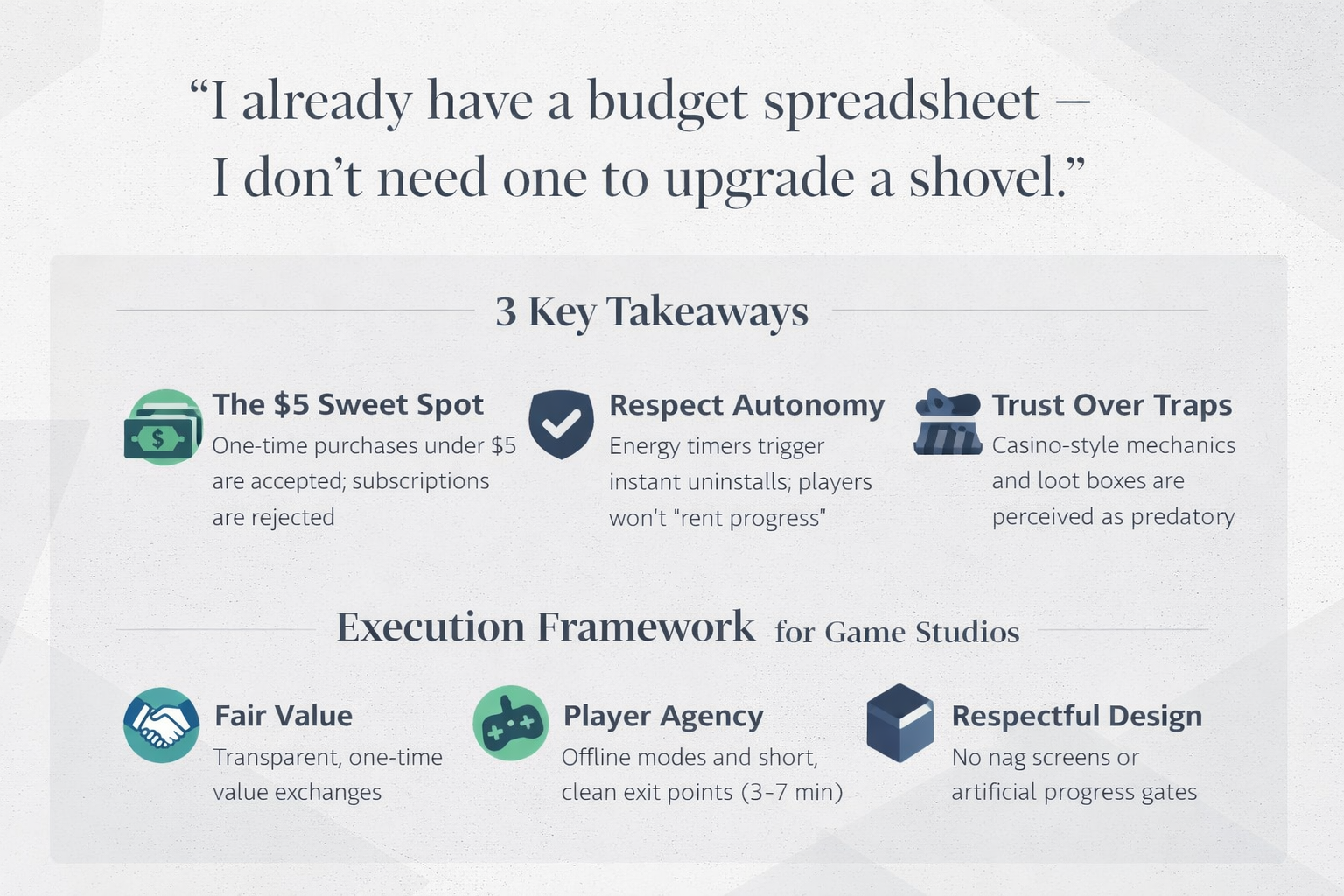
'If a game starts shaking me down for gems, uninstall. I already have a spreadsheet for my budget - I don't need one to upgrade a shovel.'
That's a direct quote from a mobile gamer in a Ditto study on F2P monetization. Six US consumers told us exactly what makes them quit games, and the feedback is gold for anyone building mobile gaming products.
The Participants
Six US adults aged 25-55, casual mobile gamers who play regularly but aren't whales. Mix of puzzle players, casual gamers, and occasional free-to-play participants. They represent the mass market: people who might spend a few dollars but walk away when pushed.
What Keeps Mobile Gamers Playing?
We asked about gaming habits and what makes a mobile game 'sticky.'
Slots and bingo on mobile feel like a trap, all flashing coins and nag screens, and I delete those in about five minutes.
Short sessions (3-7 minutes) with clear stopping points
Offline mode is critical
One-time purchases accepted, subscriptions rejected
No energy timers - ever
Key insight: Mobile gamers want to play on their terms, not on a timer's schedule.
The Monetization Breaking Point
Where's the line where monetization becomes annoying enough to quit?
That casino-skinned, bright-lights, jackpot nonsense feels like digital scratch-offs aimed at bored people. I work in risk - I can smell the variable-reward hooks a mile away.
Energy timers: instant uninstall
Loot boxes: feels like gambling
Weekly subscriptions: hard pass
One-time ad removal under $5: acceptable
Key insight: The $5 one-time payment is the sweet spot. Anything recurring feels like a trap.
Why Games Get Deleted
We asked about recent uninstalls and what would have kept them playing.
Annoy me like a toddler in the cereal aisle, and I'll drop the game without a backward glance.
Key insight: Respect user time and autonomy. Aggressive monetization creates resentment, not revenue.
What This Means for Mobile Game Studios
Energy timers are universally despised - consider alternatives
One-time purchases are trusted, subscriptions are not
Casino-style mechanics trigger 'trap' perception
Offline mode is non-negotiable for many users
Short sessions with clean exit points increase retention
Respect the player's time and budget constraints
Mobile gaming monetization has a perception problem. The industry's most common mechanics - energy timers, loot boxes, weekly passes - are exactly what users hate most. The winners will be games that offer fair, transparent value exchanges.
Want to test your own monetization strategy? Ditto lets you run studies like this in hours, not weeks. Book a demo at askditto.io.
What the Research Revealed
We asked real consumers to share their thoughts about mobile gaming habits, monetization tolerance, and what makes them delete games. The full study includes responses from six US mobile gamers across different demographics and gaming preferences.
View the complete study with all participant responses: Mobile Gaming Monetization and Retention Study