
Molson Canadian. The red maple leaf. Hockey nights. BBQs. For generations, it's been the quintessential Canadian beer, wrapped in national identity and nostalgic advertising.
But here's the thing: Molson Coors is also Miller Lite, Coors Light, Coors Banquet, and a growing portfolio of hard seltzers and ready-to-drink cocktails. Does the dual identity matter to Canadian beer drinkers? And what ACTUALLY drives their purchase decisions?
We asked 6 Canadians. Their answers were refreshingly blunt.
The Research Setup
We assembled 6 Canadian consumers aged 25-55 from across the country — Vancouver, Alberta, Quebec. Regular beer drinkers who might pick up a case on the way home from work. Not craft beer obsessives, not teetotallers. Just normal Canadians who drink beer.
We asked them three questions:
How does Molson Coors' dual identity (Canadian heritage + American brands) affect how you see the company?
What's your reaction to the "beyond beer" strategy — Vizzy, Simply Spiked, Five Trail whiskey?
What ACTUALLY matters most when you're choosing a beer?
Finding #1: The Maple Leaf Feels Like Marketing
We expected some nostalgia. We got scepticism.
"It muddies it," one Alberta participant told us. "Molson Canadian still hits the nostalgia button for me — backyard BBQs, hockey on TV, red maple leaf, all that — but the big U.S. portfolio hanging off the same parent makes it feel more like a global spreadsheet than a Canadian brewery."
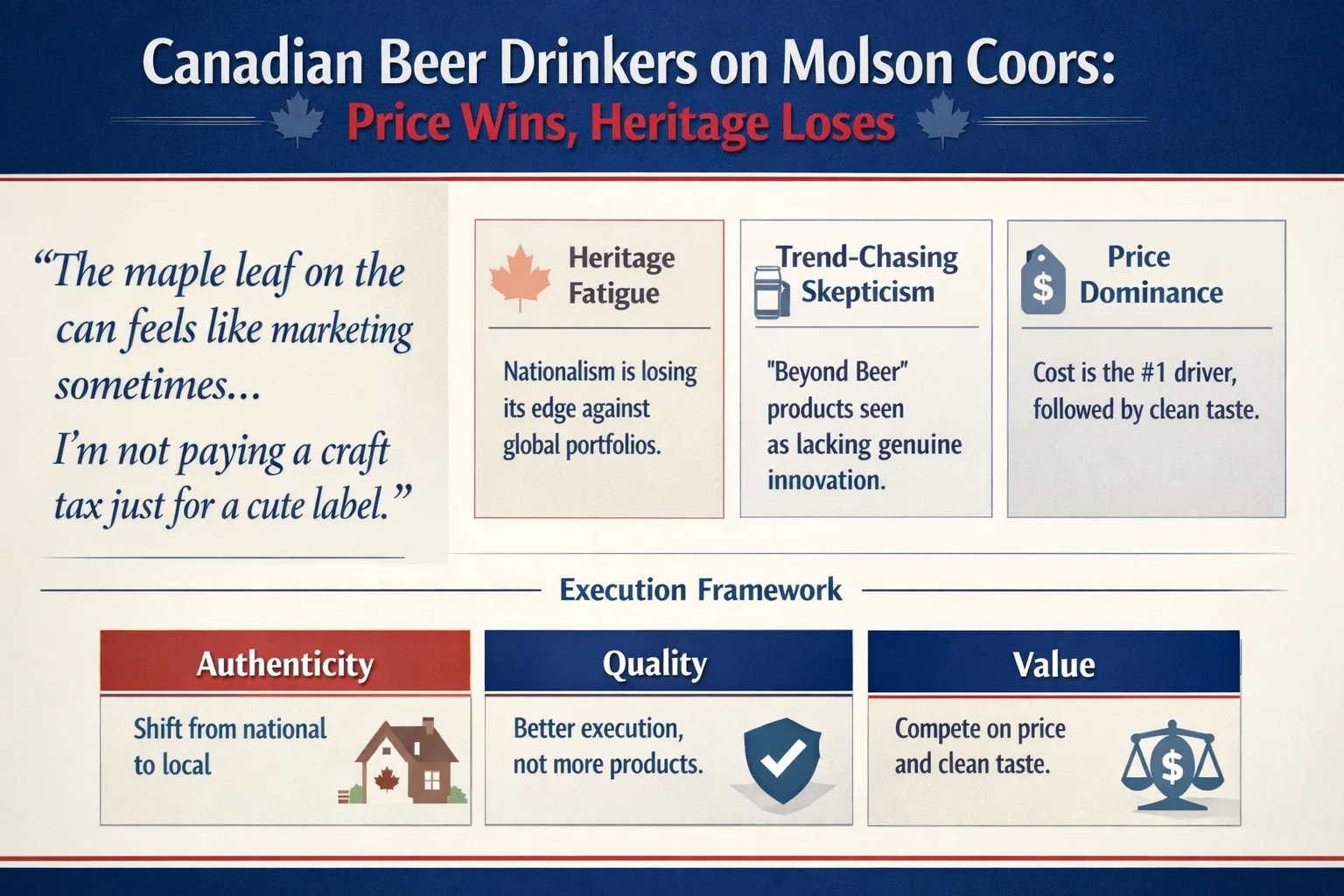
A Montreal participant was even more direct: "The maple leaf on the can feels like marketing sometimes. I roll my eyes at the ads."
The pattern was consistent: Canadians still have warm feelings about Molson Canadian specifically, but the corporate parent's American portfolio dilutes the authenticity. It's not a dealbreaker — they'll still buy the beer — but the national pride angle rings hollow when Miller Lite is made by the same company.
Finding #2: "Beyond Beer" Gets an Eye Roll
Molson Coors has been aggressively expanding beyond beer — hard seltzers like Vizzy, ready-to-drink cocktails like Simply Spiked, and even Five Trail whiskey. It's a strategic response to changing consumer preferences.
But consumers? They're not impressed.
"Short answer: mostly an eye roll," one Montreal participant said. "It feels like a big company chasing every trend to fill shelves with skinny neon cans. Most of those seltzers and spiked things taste fake or too sweet."
Another was blunter: "It feels trendy and a bit try-hard. Most canned cocktails taste too sweet and give me a headache. A lime seltzer in July is fine and I'll have one if it's in the cooler, but I'm not excited about it."
The strategic logic of portfolio diversification makes sense on paper. But to actual consumers, it looks like trend-chasing rather than brand-building.
Finding #3: Price Wins. Everything Else Is Noise.
When we asked what actually drives beer purchase decisions, the answers were gloriously simple:
"Brutally honest: I pick what's cold, clean, and not stupidly priced," a Vancouver participant said. "Heritage and rah-rah Canada stuff does nothing for me. If two options feel the same, I'll lean local, but I'm not paying a craft tax just for a cute label."
Another Alberta participant: "Price first, then taste. If a local Alberta lager is within a couple bucks I grab that, otherwise it's whatever mainstream Canadian 12-pack is on sale."
A Quebec participant summed it up: "I grab what's on sale that I know people will drink. Price wins first, then taste that is clean and easy, not too bitter, no perfume hops, and no headache next day."
The hierarchy is clear: price, then taste, then maybe local preference. Heritage, national identity, and brand story? They barely register.
The Strategic Implications
For Molson Coors, this research suggests a few uncomfortable truths:
1. The Canadian heritage angle has diminishing returns — Consumers see through the nationalism marketing, especially when it's attached to a multinational portfolio. The maple leaf doesn't hurt, but it's not the differentiator it once was.
2. "Beyond beer" needs better execution, not more products — Consumers see the seltzer and RTD push as trend-chasing. If you're going to play in these categories, you need products that taste genuinely good, not just products that exist.
3. Price is the battlefield — In the mainstream beer category, consumers are brutally price-sensitive. Taste matters, but only within a price band. Premium positioning is a tough sell unless you're offering something genuinely different.
4. Local beats national — When price is equal, consumers prefer local. "Alberta lager" beats "Canadian beer" beats "multinational portfolio." Hyper-local authenticity might be more valuable than pan-Canadian patriotism.
The Bottom Line
Molson Coors faces a classic big-company problem: the brand story that worked for decades is losing its edge. Canadian consumers still have affection for Molson Canadian, but they're not paying a premium for patriotism. And the diversification into seltzers and RTDs looks more desperate than strategic to the people actually buying drinks.
The good news? The core products still win on taste and price. But the marketing narrative needs an update. Less nationalism, more authenticity. Less trend-chasing, more product quality. Less portfolio, more focus.
Test Your Own Brand Perception
This study took about 15 minutes from question design to actionable insights. If you're curious how consumers actually perceive your brand — not what they tell you in focus groups, but what they really think — Ditto can help you find out fast.