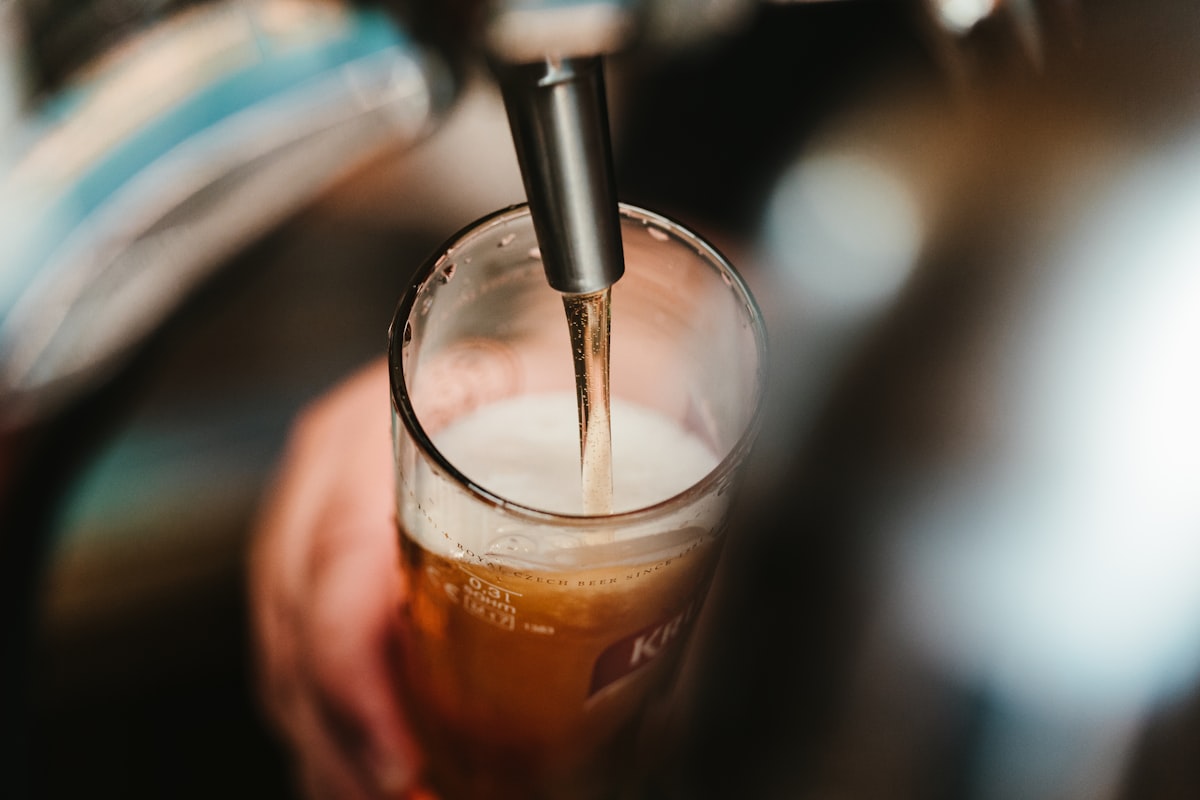
Non-alcoholic beer used to mean one thing: you're the designated driver. It was a compromise product, something you drank when you couldn't drink the real thing. Nobody sought it out. Nobody considered it a first choice.
But the category is exploding. Athletic Brewing, Heineken 0.0, Guinness 0.0, and dozens of craft NA options have entered the market. The positioning has shifted from "for people who can't drink" to "for people who choose not to drink." Dry January has become a thing. Moderation is trendy.
But I wanted to know: has the stigma actually faded? And what's holding NA beer back from becoming truly mainstream?
I ran a study with six US consumers to find out. The results reveal that NA beer has made progress, but one fundamental problem remains unsolved.
The Participants
I recruited six personas aged 26-48 from across the US - a mix of ages and drinking habits. Some were occasional drinkers who sometimes choose NA options. Others were heavier drinkers considering moderation. One was largely abstinent but missed the social ritual of having a beer. All had tried NA beer at some point and formed opinions about it.
What they had in common: openness to the category concept, experience with current offerings, and willingness to share honest feedback about what works and what doesn't.
The Taste Problem
The first finding was decisive: flavour is the determining factor. Current NA options were criticised in vivid terms: "wet bread," thin, sweet, tinny - lacking the bite, body, and clean finish of craft beer. Five of six participants said they'd drink NA beer more frequently if it achieved true taste parity with alcoholic options.
One participant described the experience directly:
"I've tried maybe ten different NA beers. Most of them taste like someone added beer flavouring to sparkling water. That sweet, thin quality - it's just not satisfying."
This isn't a marketing problem that can be solved with positioning. It's a product problem that requires brewing innovation. Until NA beer tastes as good as regular beer, the category will remain a compromise rather than a choice.
Situational, Not Daily
NA beer currently functions as a pragmatic tool for specific contexts rather than a daily choice. Participants described reaching for NA beer when driving, during weeknight dinners when they want to stay sharp for morning meetings, at work events, or during health-focused periods like Dry January.
But almost nobody described NA beer as their regular drink of choice. It's the exception, not the rule - something you substitute when circumstances require it, not something you seek out.
One participant explained the use case:
"If I'm driving home after a barbecue, I'll grab an NA. If I have a big presentation tomorrow, I might have an NA with dinner. But if none of those apply? I'm having a real beer."
The Stigma Status
The good news for NA brands: social stigma has significantly diminished. Most participants reported feeling comfortable ordering NA beer in social situations, especially in urban environments and younger demographics. The "designated driver" connotation is fading.
However, some contexts still carry residual stigma. Sports bars, tailgates, and heavily drinking-focused social occasions were mentioned as places where ordering NA might invite comment or questions. The stigma isn't gone - it's situational.
One participant noted the context-dependence:
"At a nice restaurant, nobody cares. At a tailgate with my college buddies? I'd probably get some grief. Not mean, but... comments."
The Price Sensitivity
NA beer pricing creates friction. Participants expected NA options to cost less than alcoholic equivalents since there's "less in the can" - no alcohol. Premium pricing for NA beer felt unjustified, especially given the taste gap.
One participant framed the value equation:
"I'm paying the same price for something that doesn't taste as good and doesn't have the effect. The math doesn't work unless the taste is actually comparable."
This creates a strategic challenge: NA brewing can be expensive due to dealcoholisation processes. But consumers don't care about production costs - they care about perceived value.
The Availability Gap
Limited availability suppresses trial and adoption. Participants noted that NA options are often unavailable at bars, restaurants, and events. When they are available, selection is limited - often just one or two choices compared to dozens of alcoholic options.
This creates a chicken-and-egg problem: retailers don't stock NA beer because demand is low, but demand stays low partly because NA beer isn't available when and where people want it.
What Would Change Behaviour
Participants were clear about what would shift them from occasional NA consumption to regular NA consumption:
True taste parity - NA beer that genuinely tastes as good as regular beer
Lower pricing - or at least not premium pricing over alcoholic options
Better availability - NA options at every bar, restaurant, and store
More variety - different styles and flavour profiles, not just lagers
What This Means for NA Beer Brands
If I were advising an NA beer brand, here's what I'd take away:
Invest in taste above all else. This is the fundamental barrier. Marketing can't solve it.
Rethink pricing strategy. Premium pricing for inferior taste doesn't compute for consumers.
Push for distribution. Availability drives adoption. Make NA options ubiquitous.
Expand style variety. Beer drinkers want IPAs, stouts, and wheats - not just lagers.
The Bigger Picture
What struck me most about this research was the simplicity of the barrier. NA beer doesn't have a marketing problem or a stigma problem. It has a product problem. Consumers are willing to drink NA beer - they just want it to taste good.
The path forward is clear: brewing innovation that achieves true taste parity with alcoholic beer. The brand that cracks this code will capture a category. Until then, NA beer remains a situational substitute rather than a genuine choice.
Because at the end of the day, people drink beer because they like beer. Take away the alcohol, and the flavour has to be good enough to stand on its own. That's the bar. And right now, most NA beers aren't clearing it.
What the Research Revealed
We asked real consumers to share their thoughts. Here's what they told us:
If non-alcoholic beer tasted exactly like real craft beer, would you drink it more often? What situations would you choose it over regular beer?
Taryn Fuentes, 28, Risk Analyst, Jackson, MS, USA:
Short answer: yes, if it’s true taste parity. But only if it’s priced sanely and lighter on calories. If it’s $8-9 for a placebo, no thanks. I’d pick NA over regular beer in:
DD nights or long drives
Training blocks or a 6:15 a.m. run next day
Weeknight work stuff where I need a clean brain for KPIs
Long hangs like tailgates, BBQs, weddings - alternate NA with water to pace
Hot Mississippi afternoons when I don’t want booze wrecking sleep or hydration
Airports and early flights so I don’t feel gross landing
Church events/family gatherings where I want the taste without the buzz
If it nails flavor, I’d use it more. But I still prefer one real beer, then water unless the NA checks those boxes. And please spare me the hype - do a blind flight and I’ll believe it.
Jessica Sibert, 47, Associate Director of Student Success, Oceanside city, CA, USA:
Short answer: yes. If it truly tasted like the real craft stuff, I’d reach for it a lot more. Most NA still tastes like wet bread or tinny hops, and I’m not wasting calories on that. But if the flavor nailed it, I don’t need the buzz to enjoy the ritual. I’d pick it over regular beer when:
Weeknights with dinner. I like my sleep, and alcohol still messes with it, especially with the perimenopause rollercoaster.
Driving is involved. Sunset picnic on the beach, then home on Coast Hwy - give me NA and a clear head.
Church gatherings or mixed-company socials where I’d rather keep things easy and present.
Padres games if we’ve got an early morning next day. I want the taste with my ballpark nachos, not the fog.
Hosting students or neighbors. I like staying sharp, and it signals you don’t have to drink to belong.
Hot days like today - sunny and a touch warm - when a cold one sounds great, but dehydration and I are not friends.
Book club nights when we might actually talk about the book. NA keeps me chatty, not sleepy.
When I’d still choose regular: a lazy Saturday with no alarm, a brewery date with Caleb, or on vacation when we’re walking back and the day is already soft around the edges. Otherwise, if NA really matched craft beer, it’d be my default.
Angie Frasier, 26, Unemployed Adult, Phoenix city, AZ, USA:
Still no. Even if it nailed the craft beer taste, I’m not chasing beer flavor and I don’t want the beer look. In my ward it just sparks awkward “so…?” conversations I do not have spoons for, and honestly the bitter-bready thing is not my treat. Situations I’d choose it over regular beer? None. I don’t drink regular beer at all. If there’s a toast, I’ll grab something obvious and clean instead:
Club soda with lime
Sparkling cider
Ginger ale or electrolyte seltzer
Let’s keep it simple - it’s a sunny 23C day and I’ll take crisp bubbles over cosplay-drinking every time.
Albert Schneider, 48, Senior Environmental Scientist, Rural, NY, USA:
Short answer: yeah, I’d drink it more if it truly tasted like a proper craft IPA and didn’t have that sweet, watery afterthought thing. I like the ritual and the hop bite, not the fuzz in my head or the lousy sleep. Price matters too. If it’s twelve bucks for a four-pack of pretend beer, I’m out. I’d pick the non-alcoholic one in these spots:
Weeknights when the alarm hits 5 a.m. and I want a clear head for fieldwork.
On-call storm days when the phone could buzz at midnight and I might be mapping access routes in sleet.
Driving or hauling the kids to games or late pick-ups, no debate.
Power tools and ladders - splitting wood, running the saw, up on the roof. Taste is fine, haze is not.
Hunting or fishing eves when dawn comes early and I need steady hands.
Church potlucks and school events where I’d rather keep it simple and not be “that guy.”
All-day smoking and grilling when I want a few over hours without getting slow or sloppy.
Hot summer yardwork when I’m thirsty and still have a list to finish.
I’d still grab a real IPA here and there - sitting by the firepit after the woodpile’s stacked, or after a win like last night when the Pats defense hunted like a pack of coyotes. But if the NA truly nails the taste, it would become my default more often than not. If it tastes like wet cardboard, hard pass.
A non-alcoholic craft beer brand positions itself around active lifestyle and moderation, not as a compromise for people who cant drink. Does this change how you see the product?
Taryn Fuentes, 28, Risk Analyst, Jackson, MS, USA:
Yeah, a little. Positioning it around moderation and being active makes it feel like a choice, not a pity drink, so I’m more open to it for tailgates, church nights, or when I need to drive and still show up socially. But save the glossy lifestyle fluff. I’m judging on basics: taste that hits the hop bite, calories/carbs that don’t wreck my macros, and a price that isn’t trying to cosplay premium because the can looks sporty. If it’s watery or costs regular-craft money, hard pass. If it tastes legit and stays lean, I’d keep a 4-pack in the fridge for post-run patio weather like today.
Angie Frasier, 26, Unemployed Adult, Phoenix city, AZ, USA:
Short answer: not really. The whole active-lifestyle, moderation angle is fine, but it’s still beer-coded - which is a hard no for me with the Word of Wisdom and, frankly, the taste. It also kicks up the awkward “wait, I thought you didn’t drink” thing at ward stuff, because from five feet away it just looks like beer. Add Phoenix heat, my hydration rules, and a tight budget, and I’m not paying craft prices for hops water. If the branding drops the bro-hike vibes and leans into adult soda vibes, cool for others, but still not for me.
Michael Hawkins, 33, Sales Representative, Rural, UT, USA:
Yeah, a bit. Pushing moderation beats the “can’t drink” angle. I don’t want a lecture. I want beer taste and no buzz so I can drive or keep working. If it drinks clean and isn’t sweet, fine. If it’s gym-bro branding and priced like a craft IPA, hard pass.
Price per six
Carbs and calories
Can I grab it at Maverik or the local grocer
Jessica Sibert, 47, Associate Director of Student Success, Oceanside city, CA, USA:
Yes - it nudges me from “consolation prize” to intentional choice. When a brand says moderation and movement instead of pity-party, I don’t feel like I have to explain myself at a beach picnic or book club. I kind of like that it respects people who want the ritual without the fog, especially on weeknights when sleep is the boss. If it leans too hard into the gym-bro, grindset vibe, I’m out - I want a beer, not a pep talk in a can.
What helps: normalizing NA as a lifestyle pick, clean labeling, tastes like beer, not candy, and a price that doesn’t make me feel silly.
What makes me roll my eyes: preachy “optimize your life” marketing, fake scarcity drops, and boutique pricing for something I might drink after a beach walk with Maple.
So yes, that positioning makes me more open to it - but it still lives or dies on taste, tone, and price. If it’s good, I’ll toss it in the tote for Padres-on-the-radio afternoons and still sleep fine.
What is your honest reaction to non-alcoholic beer? Is there still a stigma, or has that shifted? Would you order one at a bar or party?
Taryn Fuentes, 28, Risk Analyst, Jackson, MS, USA:
Honest take: useful, not exciting. If I’m driving or it’s a mid-week hang, a cold NA beer is a clean solve. If it’s priced like the real thing, hard pass - I’ll do Topo Chico with lime and not feel dumb paying $9 for barley water. On stigma: mostly shifted in my circles. Church folks, tailgates, backyard BBQs - nobody cares. An older uncle type might crack a joke, but if you say you’re up at 6 a.m. to run or you’re the DD, it dies fast. Would I order one? Yes, but only in specific cases:
DD or long drive after
Training week or early morning run
Trying to keep calories low and avoid sugary mocktails
Otherwise I’d rather have one real beer, then water. Also, if the bar only has the dusty token NA, I’m not playing along - I’ll bring my own to a party or skip it.
Angie Frasier, 26, Unemployed Adult, Phoenix city, AZ, USA:
Honest take? Non-alcoholic beer tastes like bitter bread water, and the vibe feels like cosplay-drinking. Hard pass for me. In Phoenix, I think the stigma has mostly shifted with the sober-curious crowd, but in my ward it still reads fuzzy since it looks like beer and invites questions I do not feel like fielding. Would I order one at a bar or party? Nope - I am not paying bar prices for pretend beer. I’ll grab something cold and obvious instead:
Club soda with lime or a nice ginger ale
Mocktail that’s clearly booze-free
Electrolyte seltzer if I can swing it
Let’s keep it simple. It is a sunny 23C kinda day and a crisp seltzer beats faux-beer every time.
Jessica Sibert, 47, Associate Director of Student Success, Oceanside city, CA, USA:
Honest take: I like the idea of non-alcoholic beer more than I like most of the actual cans. A lot still taste like wet bread or a malt tea that forgot its backbone, though the newer craft ones are getting closer to the real thing. I care about sleep and early mornings, so the no-buzz option fits where I am in life. Has the stigma shifted? Around North County it has. Between mocktails, kombucha, and hop water, nobody blinks at a sober-friendly drink at book club or a beach picnic. Caleb’s jobsite friends might crack a joke, but grownups get over it. At church stuff, no one is keeping score anyway. Would I order one? Yes, in the right setting. If I’m driving, it is a weeknight, or I need a clear head for a dawn walk, I’ll grab an NA lager if the bar has a decent one. If the choices look sad, I default to soda water with lime or a gingery mocktail and move on. At a party, I’ll bring my own six-pack and park it in the cooler without a speech. If someone cares what is in my glass, that is their hobby, not mine. Bottom line: the stigma is mostly gone, the taste is hit-or-miss, and I’ll order one when I want the ritual without the fog.
Jonathan Reinoso, 41, Sales Representative, Gresham city, OR, USA:
Honest take: used to be nasty, now a few are solid. I’m not pretending it’s the same as a cold lager after mowing, but if I’m driving or I need a clear head, I’m fine with it. Paying bar prices for one still annoys me, but it beats explaining for 20 minutes why I’m not drinking. With everything feeling tense lately, I’d rather stay sharp than chase a buzz. Stigma: it’s shifted here. In Portland nobody blinks. At family carne asada, a couple tíos still clown you, but I don’t care. I’m up at 6 for drop-off. Would I order one: yeah, in specific lanes. Client lunch, kids’ practice after, weeknight during a Timbers match, or if I’m on pickup duty. Backyard party, I’ll bring my own so people stop asking “no estás tomando?” and move on. Quick cost-benefit from my brain:
Cost: NA at a bar $6-8 vs Uber $25+ or risking a headache and a dumb decision. I’ll eat the $6.
Time: zero hangover, up early, no margin hit on next morning’s calls.
Trade-off: taste is hit-or-miss and still calories, but it keeps the social script simple.