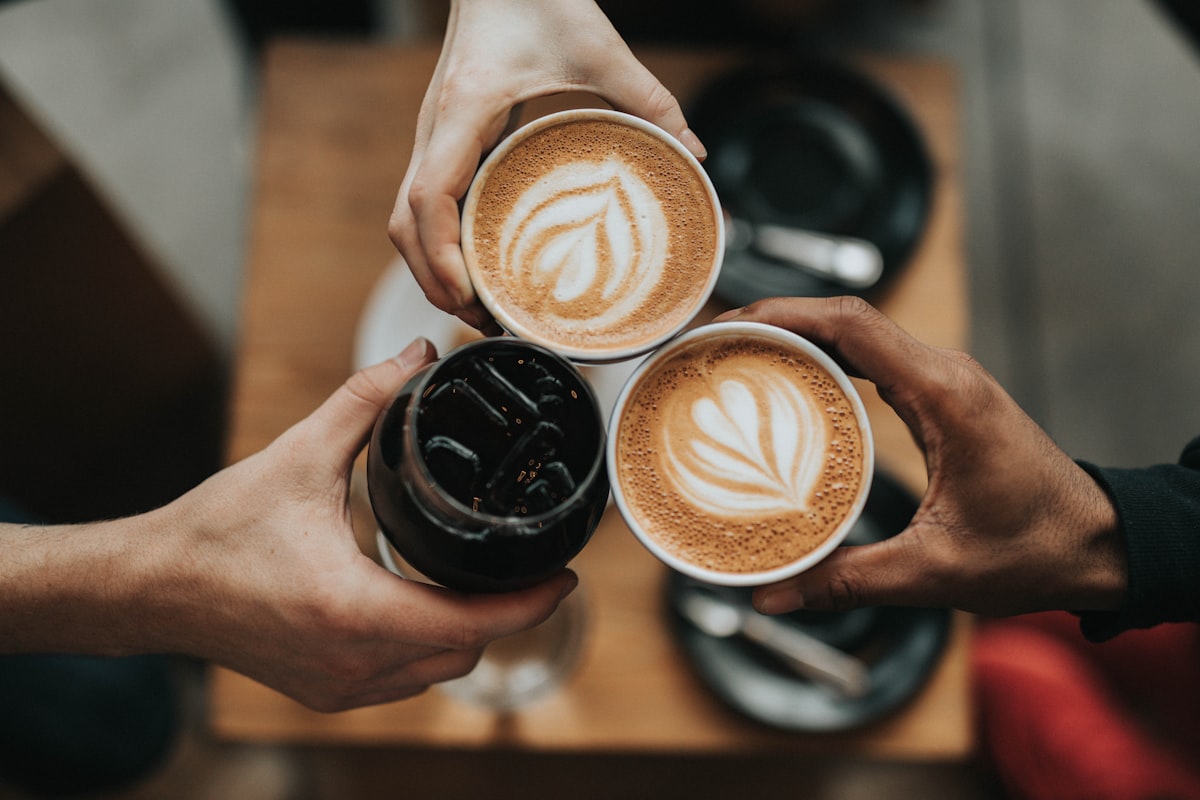
I've been a specialty coffee convert for years now. Started innocently enough. A friend dragged me to a local roaster, I tried something that wasn't Starbucks, and suddenly I understood what people meant when they said coffee could taste like blueberries. Wild. I remember standing there genuinely confused that this beverage came from the same plant as the stuff in my office break room.
But here's what's always puzzled me: what actually makes someone take that first leap from commodity coffee to specialty? And once they do, what makes them come back instead of just returning to Tim's where there's no line and it costs two dollars?
I ran a study with 6 Canadian specialty coffee buyers to find out. The answers were genuinely interesting, and honestly, some of the decaf feedback was brutal.
The Participants
I recruited 6 personas from across Canada through Ditto, covering Ontario, Quebec, and BC. Ages ranged from 28 to 50, incomes from $25k to nearly $200k. Some were bilingual. All of them buy specialty coffee regularly but aren't die-hard enthusiasts who own hand grinders and argue about extraction ratios on Reddit.
Pretty representative of the "quality-seeking but price-aware" crowd. The kind of people who appreciate good coffee but also check the price tag before committing to a bag. This is the growth market for specialty roasters, the people who could go either way on any given purchase.
What Makes Someone Try a New Roaster?
First question: think about the last time you tried a new local specialty roaster. What made you take that leap? What nearly stopped you?
The answers clustered around sensory proof. Not brand story. Not Instagram aesthetic. Not claims about farmers or sustainability. The thing that actually converted them was physical evidence that the coffee would be good.
One participant put it perfectly: "The coffee stall smelled like warm chocolate...That did it."
That's it. That's the conversion. Not a clever marketing campaign. Not a story about direct trade. The smell. The immediate sensory evidence that this would be different from what they usually drink.
Other trial drivers that came up repeatedly:
Visible roast dates - removes the "is this stale?" anxiety that plagues every specialty purchase
Tasting samples - low-friction proof that the product is actually good before committing
Clear flavour descriptions - knowing what you're getting so you don't end up with something weird
What nearly stopped them? Two consistent barriers emerged:
Price-per-cup anxiety - doing the mental math on a $22 bag and wincing at the daily cost
Fear of weird flavours - "I don't want something that tastes like grapefruit" came up multiple times
Key insight: Trial is about reducing perceived risk, not building brand love. Samples, roast dates, and honest flavour descriptions do the heavy lifting. The origin story can wait.
The Decaf Question (Ouch)
Second question: what do you really think about decaf coffee? Would a 10% discount on Swiss Water decaf interest you?
Right. So. The feedback was not kind. Multiple participants described decaf as "sad coffee" or something they'd only drink if they absolutely had to for health reasons. One participant was particularly memorable: "Decaf tastes like wet cardboard."
The Swiss Water Process helped with the chemical concern. People don't want weird solvents in their coffee. They know the standard decaf process uses chemicals and that bothers them. Swiss Water addresses that concern. But it didn't fix the taste perception. The assumption that decaf inherently tastes worse remains strong.
A 10% discount? Didn't move the needle at all. The discount actually reinforced the perception that decaf is a lesser product. What participants actually wanted:
Small trial sizes - "Let me try it without committing to a whole bag that I might hate"
Satisfaction guarantees - "If I hate it, can I swap it for regular coffee?"
Proof it tastes good - actual tasting samples, not marketing claims about quality
Key insight: Swiss Water is necessary but not sufficient. It removes the chemical objection but doesn't overcome the taste stigma. Decaf conversion requires proof-in-cup via small formats and low-risk trial options. Discounts make it worse, not better.
What Makes Someone Come Back?
Third question: what would make you become a repeat customer versus buying once? Would you subscribe?
This is where it got genuinely interesting. Brand story? Origin farm details? Ethical sourcing narrative? The things that specialty coffee marketing usually leads with?
Barely mentioned. Not a single participant cited these factors as what would drive repeat purchase.
What they actually cared about:
Consistency - "Does it taste the same every time I buy it?"
Freshness - "Is it actually fresh when it arrives at my door?"
Easy logistics - "Can I pick it up nearby? Is delivery reliable?"
Transparent pricing - "No weird subscription traps that are hard to cancel"
And on subscriptions specifically: major skepticism. This came through strongly across all participants.
One participant put it clearly: "I'd need at least 3 good orders before I'd even consider subscribing."
The participants wanted subscriptions to be opt-in after trust was established, not as the primary conversion path. And they were very clear about needing skip, pause, and cancel functionality. No lock-ins, no dark patterns, no friction when they want to stop.
Key insight: Loyalty is operational, not emotional. Freshness, consistency, and logistics predictability beat storytelling every time. Subscriptions convert after trust is earned, not before.
Regional Wrinkles
A few regional variations came up that I hadn't expected:
Quebec buyers were clear: French labeling and plain-language copy weren't nice-to-haves. They were decisive factors. One participant said she'd passed on roasters because the packaging was English-only. For brands serious about the Quebec market, this isn't optional.
Budget-conscious buyers (lower income brackets) prioritized trial sizes above everything else. They wanted to test before committing to a full bag. The risk of wasting money on something they don't like is real.
Higher earners cared more about logistics predictability. They wanted to know exactly when things would arrive, not a three-day delivery window.
Coastal and island shipping was a specific concern for the BC participant. Freshness anxiety around shipping times was real. How fresh can coffee be if it takes a week to arrive?
What This Means for Specialty Roasters
If I were a specialty coffee brand reading this, here's what I'd take away:
Standardize trial sizes - 100-200g bags including Swiss Water decaf options
Print roast dates prominently - on the front of the bag, not hidden on the bottom
Offer bilingual packaging - mandatory for Quebec, helpful everywhere in Canada
Don't lead with subscriptions - position them as an opt-in after 3+ successful purchases
Implement quiet swap/credit guarantees - de-risks trial without advertising "we expect you to hate it"
Roast-to-ship transparency - if you can ship within 48 hours of roasting, say so clearly
The Bigger Picture
What struck me most about this research was how practical the feedback was. These weren't coffee nerds debating extraction ratios or arguing about single-origin versus blends. They were normal people who wanted good coffee without the anxiety of making a bad purchase decision.
Trial is about smell and samples. Loyalty is about freshness and logistics. Subscriptions are earned, not assumed.
Pretty useful to know if you're trying to grow a specialty coffee brand in Canada. The romantic narratives about origin farms and sustainable sourcing matter, but they're not what drives trial or repeat purchase. Get the operational basics right first, then layer the story on top.
Want to test your own coffee positioning with Canadian consumers? Ditto lets you run studies like this in hours, not weeks. Book a demo at askditto.io.
What the Research Revealed
We asked real consumers to share their thoughts. Here's what they told us:
Imagine you found a local specialty roaster whose coffee you genuinely loved. What would make you become a repeat customer versus just buying once and moving on? Would you ever subscribe for regular d
Evelyn Cheng, 50, Project Coordinator, Toronto, ON, Canada:
Repeat buy is simple: clean, consistent, low-acid cup every time, big roast date, and no fluff. If your chocolatey, nutty profile tastes the same on a wet, cold Tuesday as it did last month, I’ll keep you in my rotation. If I have to chase grind settings because batches drift or you slip into lemon land, I’m gone. What locks me in as a repeat:
Consistency - same profile week to week. No surprise brightness.
Freshness - roasted within a few days, ships fast. Valve bag. Date printed huge.
Plain info - origin, process, weight, simple brew ratio and temp. No poetry, no QR circus.
Fair price - stable, not sneaking from 19 to 23 for the same bag.
Easy buy - farmers market or a clean online checkout without forcing an account.
Backup options - a decaf that actually drinks like coffee for nights. No solvent funk.
Control - pause, skip, cancel from one screen. No emails back and forth.
Frequency I set - monthly or 6-week, not your calendar.
Roast-to-ship window - out the door within 24 hours of roast, not sitting all weekend on a soggy porch.
No bait-and-switch - same coffee I picked, no mystery blends unless I ask.
Privacy - no SMS spam, no birthday harvest. Charge card, send beans, done.
Local pickup option - if I’m already at the Rouge market getting eggs in the rain, I’ll grab it there.
Crowd-pleaser profile - balanced, chocolate, low-acid. Easy for my mom, easy for the shop guys.
Giftable format - 340 g with a small brew card. Clean bag. No neon branding.
Service when things go wrong - stale bag or shipping damage, you fix it fast without a lecture.
Sampler - half-bags so I can match people’s taste without wasting money.
Batch drift into citrus after I told you I want nutty.
Stale delivery with a cute story on the bag.
Price jumps with no reason.
Data grabs and newsletter spam.
Keep it tight and predictable. Print the roast date big. I’ll be back.
Nicolas Leblanc, 45, Customer Success Manager, Nanaimo, BC, Canada:
If I genuinely love a roaster, I become a repeat customer only if the coffee is predictable in the best way. I want the same clean, balanced cup at 6:30 a.m., not roulette. Keep the info tight and honest, keep the roast profile steady, and do not make me wrestle with subscriptions or gimmicks when all I want is beans. What keeps me coming back:
Consistency: same roast intent week to week, not drifting into lemon-pledge territory.
Transparency: roast date, origin, process, and a sentence about how they dialed development. No poetry, just facts.
Logistics that respect my routine: early hours, quick in-and-out, bag return bin, and coffee that is roasted within 72 hours of me buying it.
Pricing sanity: fair price, no surprise markups for limited labels or collabs I do not care about.
Frictionless control: pause, skip, or cancel with one click, no app, no emails nagging me.
Freshness guarantee: delivery within 48 hours of roast, and a swap if a bag is clearly off.
My parameters: choose style range, grind size if needed, cadence that matches consumption, and no surprise substitutions.
No creep: stable pricing, taxes and shipping spelled out, no bundling me into a newsletter.
Receipts, not vibes: pay transparency and sourcing details that stand up to questions.
Decaf that drinks like coffee: if their Swiss Water lot is lively and fresh, that tells me they care about the whole lineup.
Good manners: staff who can talk extraction without condescension, bilingual labels are a plus.
Giftable formats: tidy recyclable packaging, 200 g samplers, a simple brew card. No tote bags required.
Start pushing scarcity drops or making me sign up for anything at the till, and I am out. Keep it steady, respectful, and fresh, and I will happily bike over in the rain for refills.
Lucas Ali, 33, Product Manager, Barrie, ON, Canada:
What makes me stick around vs one-and-done
Consistency. Same cozy medium profile week to week. If bag A tastes like chocolate-toast and bag B tastes like citrus water, I’m gone.
Clear roast date and straight talk. Medium, sweet, French press friendly. No poetry, just brewability.
Price sanity. Low-20s for a 340 g feels fair if it’s dependable. A small multi-bag break helps.
Easy pickup at the Barrie market or free local drop on the south end. Don’t make me play account sign-up bingo on a clunky site.
Respect for my routine. Brews well at normal ratios, not fussy gear. If I need a gooseneck circus, non.
Quiet loyalty perk - bring back the bag for a buck off, or 10th bag free. My pépère would approve.
Maybe, but I’m subscription-skeptical. It needs skip-pause-cancel in 10 seconds - SMS or simple email reply. No app, no traps.
Cadence control. I drink more on kid-free weeks, less on dad weeks. Let me slide between 2, 3, 4 weeks without penalties.
Price parity with market pickup and shipping included or a clear pickup option. Don’t charge me extra for convenience.
Transparency on blend tweaks. If the components shift, say so on a card in the bag. I don’t want mystery cups.
Make-it-right guarantee. If a bag is off, you swap it, no drama. That’s trust.
They poured me a sample that matched the label and brewed easy at home. I can vouch, then I’ll vouch to friends.
Normal-person tasting notes and a tiny bilingual brew card. I hand that to a buddy and they’re set.
Good neighbor energy. They once swapped a bag without fuss or donated to a local drive - I notice.
Giftable formats. Two 200 g sampler, tidy resealable bags, a simple printable gift note. Option for a decaf that still tastes like coffee for my mom.
Looks matter a bit. Clean bag, not loud. If it won’t embarrass me on a host’s counter, I’ll bring it to dinner.
Net-net: win me with dependable medium comfort, honest labels, and low-friction buying. Nail that, and I’ll be the guy at the rink saying, “Try this one - brews like a charm,” and grabbing a sampler for a housewarming. On a chilly, rainy Barrie morning like this, I’m loyal to whoever makes my kitchen smell like I’ve got my life dialed in. For 10 minutes, anyway.
Nadège Saint-Louis, 42, Community Organizer, Lévis, QC, Canada:
If I truly loved it, I’d become a repeat only if it stays consistent, fair, and easy. I’m not chasing hype. I’m juggling envelopes and snow on the ground, so no nonsense. What makes me come back:
Same taste every bag, not sour one week, burnt the next. Roast date big, fresh, in French.
Normal price for the size, no shrinkflation tricks. A simple loyalty punch that actually gives a free bag after X, not points games.
Format that fits my life: small bag option, grind for French press at no extra fee.
Zero attitude in French, clear labels, simple brew tips. If I email, a human answers fast.
Easy pickup or cheap delivery. On a 2°C snowy week, I’m not crossing town for beans.
Month-to-month, pause or skip in 2 clicks, cancel online with no drama.
Real savings that covers shipping. No setup fee, no surprise add-ons.
Flexible: change bag size, grind, and roast before each shipment, with a reminder 3 days before.
Stable pricing and they don’t quietly make the bag smaller.
After 3 good bags in a row, then I’ll post in my local Facebook group and tell neighbors at the market.
If they fix problems fast - like one off bag replaced with a smile - I trust them.
Gift sets with small sizes under 35 bucks, grind option, note in French, simple box. Perfect for my mom, my sister, or a host gift after skiing.
Price creep and smaller bags for the same cost.
Inconsistent roast, sour batch, or labels switching to vibe-English only.
Subscription traps, hidden fees, missed deliveries without owning it.
I’m not asking for magic. Just keep it steady, keep it clear, and don’t waste my time or my budget. If they do that, I’ll stick around. If not, I’m out.
Be honest: what do you really think about decaf coffee? Is there any stigma in your mind? If a specialty roaster you trusted was running a 10% off promotion on their Swiss Water Decaf, would that inte
Nicolas Leblanc, 45, Customer Success Manager, Nanaimo, BC, Canada:
Decaf still carries a stink in my head: too often it drinks like wet cardboard because the roaster treated it as an afterthought. If it is Swiss Water, fine, at least we dodge the chemical-twang myth and it is processed close to home, but I have been burned by flat, papery cups that ruin dessert. On a grey, drizzly week like this, I want the real kick at 6:30 a.m., not a placebo in a nice bag. A 10% promo would not move me. I would scroll past unless I was already buying other beans and could toss in a small bag as a low-risk experiment. What would actually get me to try high-quality decaf:
Proof it is not an afterthought: same level of origin detail, harvest window, and process notes as the flagship lots.
Freshness: clear roast date and frequent batches, not a dusty side shelf.
Taste evidence: a by-the-cup sample on the brew bar or a 200 g bag option so I do not gamble a week of mornings.
Roast intent: say how they adjusted development for decaf, so it is not baked and lifeless.
Amélie, on late marking nights when she wants the ritual without wrecking sleep.
My mom when she visits, because one post-dinner espresso and she is staring at the ceiling till 2 a.m.
A neighbour who just had a baby, because caffeine is a minefield and they still deserve a proper cup.
Net: I am open but skeptical. Show me it tastes like coffee, not penance, and I will put a small bag in the basket. If it is just a sale sticker on mediocre decaf, I am out.
Nadège Saint-Louis, 42, Community Organizer, Lévis, QC, Canada:
Honestly, decaf still has a bit of a stink in my head. Old diner memories - flat, watery, sad. If I pay the same price, I want some kick. But in winter like today, 2°C and snow, I do like a hot cup at night without wrecking my sleep, so I’m not closed. I’m not an expert, but every decaf I liked was darker and simple, nothing fancy or sour. 10% off on Swiss Water? Maybe. If the bag is still 20+ dollars for 340 g, I’d probably scroll. If they offer a small bag and grind for French press, I might try once, just to see. Swiss Water sounds cleaner, fine, but I need proof in the cup, not marketing. What it would take for me to try:
Small trial size, under 15 bucks, grind option for French press.
Roast date big and clear, tasting notes in French, normal words, not poetry.
Simple brew guide so it doesn’t go thin or sour.
Some guarantee or at least samples at the market.
My sister in Montreal if she was pregnant or cutting caffeine.
My mom or an aunt who watches blood pressure.
Marc-André for a late hockey game coffee that won’t keep him buzzing.
Keeping a bag for guests after skiing - nice to offer coffee at 8 pm that won’t wreck their night.
So yeah, a little stigma, but not a hard no. If the price and format are right, and it tastes like real coffee, I’ll give it one shot. If it screams vibe with no details, I scroll.
Lucas Ali, 33, Product Manager, Barrie, ON, Canada:
Gut check? Decaf still rings as brown sadness in my head - hospital waiting room vibes, papery finish, no backbone. There’s a stigma, yeah. But my 3 p.m. caffeine cutoff is real, and on a rainy Barrie night like this, I do want a warm cup without the 1 a.m. eye twitch, so I’m torn. Bon, I’ll respect a decaf that tastes like coffee, not hot lawn clippings. A 10% off Swiss Water promo? I’d probably scroll. Discount isn’t the blocker - proof in the cup is. If a roaster I trust poured me a small sample that hit chocolate-toast territory and said it’s easy in a French press, I’d buy a small bag. Otherwise, tabarnouche, I’m not gambling a full-price 340 g on nostalgia. What it would take for me to actually try it
A sip first, or a 200 g tester bag. Lower the risk.
Big, honest roast date and a plain claim like: brews great in French press at normal ratios.
Tasting notes that stay in the warm-nutty-cocoa lane, not floral perfume.
A no-drama swap if it’s thin or sour. Even a quiet “we’ll make it right” goes far.
My mom - she likes an after-dinner cup when we do Sunday dessert.
A friend who’s expecting - she misses the ritual more than the buzz.
The neighbor who drops by for late Leafs games - coffee at 9 p.m. without the jitters is civilized.
Parish repair café stash - always someone asking for decaf.
If a trusted roaster nails a cozy, medium decaf that behaves in a French press, I’ll begrudgingly admit I was wrong and keep a bag for evenings. Until then, I’m skeptical, not hostile.
Olivia Grant, 28, Administrative Assistant, Kitchener, ON, Canada:
Gut check: decaf still carries a little why bother stigma for me. Too many flat, papery cups that taste like the memory of coffee instead of coffee. That said, I like the ritual after 2 pm but I also like sleeping, so I’m not anti-decaf - I’m anti-bad-decaf. A 10% off Swiss Water promo would mostly make me scroll. That’s like $21 down to ~$18.90 for a 340 g bag - about $1.10 a cup vs $1.20, which doesn’t move the needle for a risk buy. What would actually get me to try it:
Side-by-side sip with their regular medium roast so I know the chocolate-nut vibe survives the decaf process.
Small bag - 200 to 250 g - priced under $15, or a 100 g add-on for 5 bucks.
Clear brew guidance for French press to avoid sludge, plus a grind-on-the-spot option.
Roast date front and center, no tasting-note poetry, just plain language.
Swap-or-refund if it drinks like cardboard. Even a store credit is fine.
My mom in London - caffeine past noon wrecks her sleep but she still loves the smell.
A pregnant friend in my running group who misses the ritual.
My in-laws in Markham for an after-dinner cup that won’t jitter them.
Us, honestly, to mix half-caf on work nights when I’m protecting sleep before a morning run.
If they tossed in a 100 g decaf sample with any bag this rainy week, I’d bite, brew it after 2 pm, and see if it earns a spot in the rotation. If it tastes like real coffee and stays under that $1-a-cup line, I’m in. If it’s vague claims and no try-before-buy, I’m out.
Think about the last time you tried a new local specialty coffee roaster instead of your usual coffee (Tim Hortons, Starbucks, grocery store beans). What made you take that leap? Was it a recommendati
Sara Hughes, 40, Shift Lead, Shipping & Materials, Markham, ON, Canada:
My concern was pretty simple: pay 23 bucks for a 340 g bag that might taste like lemon rind at 6 a.m. and then I’m stuck drinking it all week. I took the leap after a rainy Sunday birding run when we cut through the Unionville farmers market and the roaster had a roasted yesterday stamp and tiny pour samples; it smelled like caramel and nuts, not that sour grapefruit thing I hate, so fine, I caved. Also my ski buddy Lina swore by them, and she’s picky to a fault, so that nudged me. Cost brain still chirped: at ~15 g per cup, that bag is like 22 cups, so roughly a buck a cup vs my grocery stuff at 30 to 40 cents, which stung a bit but I figured one trial wouldn’t blow the budget. The hipster tasting notes made me roll my eyes - guava jam, sure, okay - but the sample tasted normal-good, and mornings are sacred, so that mattered more. It landed fine, but I still rotate with my Costco can to keep cost-per-cup sane. What nearly stopped me:
Price risk: spendy bag, zero return if it’s a miss, and I hate waste.
Style mismatch: worried it would be too light and acidic for my drip setup and my stomach.
Packaging and push: flimsy reseal, no valve, and the cashier nudging a subscription at checkout is an instant nope for me.
Nadège Saint-Louis, 42, Community Organizer, Lévis, QC, Canada:
It happened last fall at Marché du Vieux-Lévis. Cold day, hands numb, I was walking back from errands and the smell hit me. A neighbor from the clothing drive waved me over, said their medium roast was not sour and not burnt. I gave in.
What pushed me to try: a free little sample that tasted clean, the roast date printed huge, the seller spoke to me in French without attitude, and my neighbor’s word. They also had a small trial bag, not only the big one. That felt safe.
What almost stopped me: the price, point final. My grocery envelope was tight and a 340 g bag at 20+ dollars hurts. I hate bags with fancy tasting notes and no clear info in French. I was scared it would be too light and taste sour in my French press. Also if I hated it, then I’m stuck with a full bag and Marc-André would roll his eyes at the waste. And some places only sell whole beans, so I worried my old grinder would make it worse.
It turned out good, but I’m not becoming a coffee snob. I buy a bag here and there when we have room in the budget, that’s it. Give me clear labels, a roast date, a small size, and a normal price. If it’s all vibe and no details, I walk.
Lucas Ali, 33, Product Manager, Barrie, ON, Canada:
Short version: I took the leap at the Barrie farmers’ market on a wet Saturday because the roaster poured a tiny sample that actually tasted like chocolate and toast, not grapefruit juice. Price almost sent me back to my usual tin. Curiosity and a clear roast date won. Longer version:
What nudged me to try it - I walked past their stall after buying carrots and they were doing samples. I’m not made of stone. - The bag had a roast date from that week, big and honest. No fluff, no subscription pitch. Bon. - The roaster spoke a bit of French with me, explained the profile like a normal human - medium, sweet, easy for French press. No pretension about rare altitude moonbeams. - It smelled like my pépère’s percolator but...better. Warm, nutty, a little cocoa. That hit me right in the Sunday-morning-vinyl routine. - I like putting money into local hands when the thing is actually good. I’ll pay a bit more if it’s not a diva to brew.
What nearly stopped me - Price-per-cup math. A 340 g bag at 20-something bucks versus the big grocery bag on sale... tabarnouche, that’s a leap. - I’ve been burned by lighter roasts that taste like hot lemon water unless you have a gooseneck, a scale, and twenty spare minutes. Mornings with a kid? Not happening. - Hipster tasting notes give me hives. “Starfruit and lilac” sets off my BS meter. If I want flowers, I’ll go to Bradford Greenhouses. - Risk my grinder wouldn’t play nice. I rebuilt the burrs last winter to keep it alive - works great for medium - but if a coffee needs micro-adjustments, I’m out. - Freshness anxiety. If I don’t plow through the bag in two weeks, am I just drinking stale guilt?
What felt risky about the unknown brand - That I’d pay extra and get a fussy, sour cup I can’t fix without changing my whole routine. - Inconsistency bag to bag. Small roasters can drift - I don’t want to chase last month’s magic. - The vibe. If the pitch leans more on origin romance than brewability, I assume I’m buying marketing.
Net-net: the sample and the straightforward medium profile beat my skepticism for once. I still keep the grocery standby around for chaotic weeks, but on a rainy Barrie morning, that local bag made the kitchen smell like I actually have my life together. For 10 minutes, anyway.
Nicolas Leblanc, 45, Customer Success Manager, Nanaimo, BC, Canada:
Rainy Saturday, 3 degrees, fingers numb after a ride along the E&N, I ducked into a tiny roaster in the Old City Quarter because the place actually smelled like coffee, not caramelized air freshener. A neighbour had just gifted us a bag as a thank-you for a small favour, and it brewed clean, so curiosity overrode my default defensiveness about hype. They had the roast date front and center, origin and processing on the bag, and they poured me a small cup without the sales patter, which helped. Morning coffee is sacred in our house, so changing beans feels like messing with the operating system, not a little tweak. What nudged me to take the leap:
Transparency: farm, variety, process, roast date, not just cute tasting notes.
A quick taste on site and a sane medium roast that would behave on pour-over.
Reusable bag return bin and a straight answer about sourcing. No greenwash poetry.
Neighbour’s gift had already cleared the trust hurdle a bit.
Price: dropping 22 to 26 bucks on 340 g that might drink like grapefruit pith is a gut-clencher.
The risk of a hyper-light roast that turns my first cup into lemon pledge. I do not enjoy sour at 6:30 a.m.
No sample sizes, no guarantee, and the quiet dread of committing a week of mornings to a mistake.
Pushy subscription prompts and email capture at checkout. Hard pass. I just want beans.
Island logistics: if it had been mail-order, shipping and staleness would have killed it.
So yeah, I took the chance because they treated me like an adult, not a mark, and because the gift bag had earned a baseline of trust. If any of that had wobbled, I would have walked back into the rain and stuck with my usual without a second thought.