
The Thumb-Sprain Test for Political Ads
We asked six battleground voters what makes them stop scrolling through their social feeds for political content. The answer wasn't what most campaign strategists want to hear.
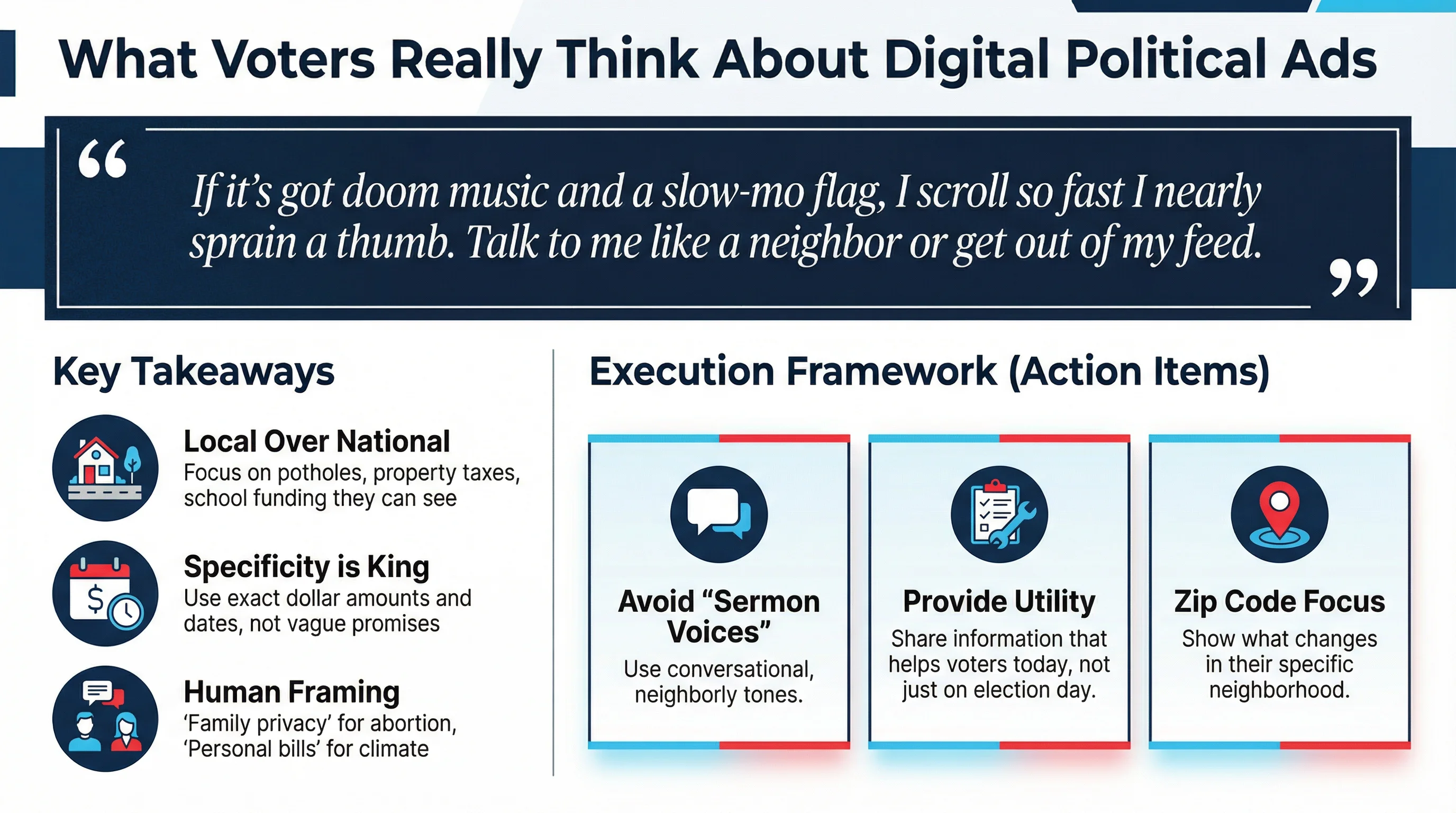
"If it's got doom music and a slow-mo flag, I scroll so fast I nearly sprain a thumb. Talk to me like a neighbor or get out of my feed."
That quote captures something campaigns consistently get wrong: the assumption that emotional intensity equals engagement. For voters saturated with political content, the opposite is true.
What Actually Makes Voters Stop
The pattern was clear across all six respondents. They stop scrolling for:
Local issues that hit their street - potholes, property taxes, school funding they can see
Specific dollar amounts and dates, not vague promises
Real people speaking human, not polished performances
Information that helps them today, not just election day
The Abortion and Climate Messaging Trap
On hot-button issues, voters had specific feedback about what works. For reproductive rights, "family privacy" framing landed better than "rights" language. One respondent explained they tune out the moment they hear "sermon voices and soft piano."
Climate messaging only works when it's personal. References to "their flooding" or "their energy bills" get attention. Abstract global warming statistics get scrolled past.
The Share-Worthy Test
Perhaps most valuable: voters told us what would make them actually share political content. The bar is high.
It helped someone they know today
No traps, no theater, no manipulation
Practical information their family can use
Something that changes their neighborhood, not just national politics
Implications for Campaign Strategy
The research suggests campaigns may be over-investing in emotional intensity and under-investing in local specificity. Voters want governance content, not campaign content. They want to know what changes in their zip code, what it costs, who pays, and when they'll feel it.
The most effective political ads, according to this research, look less like traditional campaign spots and more like local news.