Online meat delivery sounds incredibly convenient. Local farms shipping quality cuts directly to your door. Premium steaks and roasts without visiting the butcher. Subscription boxes that take the planning out of protein. But when I talked to actual consumers about ordering meat online, the anxiety was palpable.
I ran a study with six health-conscious Canadians to understand what's blocking them from ordering meat online, and more importantly, what would actually convert them from skeptical observers to active customers. The barriers are real and the concerns are legitimate. But they're also entirely solvable with the right operational approach and transparent communication.
The Participants
I recruited six personas from across Canada - Thompson MB, Saanich BC, Longueuil QC, Grande Prairie AB, and Guelph ON. Ages ranged from 28 to 50, with occupations spanning from operations managers to health unit clerks. All were health-conscious consumers who genuinely care about meat quality, know what good product looks like, and are willing to pay for premium sourcing.
What they had in common: they've all seen online meat delivery marketing, they've all considered trying it, and they all have specific concerns that have prevented them from actually placing an order.
The Trust Problem
Online meat delivery sounds incredibly convenient on paper. Local farms shipping quality cuts directly to your door without the trip to the butcher. Premium steaks and roasts arriving fresh when you need them. Subscription boxes that take the planning out of protein sourcing. But when I talked to actual consumers about ordering meat online, the anxiety was palpable and immediate.
The key barriers that emerged:
Temperature integrity concerns - will the meat stay cold throughout transit? What if the delivery is delayed?
Quality verification anxiety - you can't inspect the marbling, colour, or freshness before buying
Hidden cost suspicion - shipping fees, minimum orders, and premium pricing that may not be worth it
Return/refund uncertainty - what happens if the product arrives spoiled or doesn't meet expectations?
One participant captured the core concern:
"I can't physically look at it before I buy it. At the butcher shop, I can see the marbling on the steak, check the colour of the meat, smell if something's off. Online? I'm trusting photos and descriptions from a company I've never dealt with before. That's a significant leap of faith for something I'm going to feed my family for dinner."
The Marketing Claims Question
I tested a typical marketing claim: when a meat company says their products are "grass-fed, hormone-free, antibiotic-free, and locally sourced from Ontario farms" - does that make you more likely to buy?
The answer: broadly skeptical. The entire phrase set reads like marketing copy unless backed by specific, verifiable provenance that consumers can independently confirm. Consumers have heard these claims too many times from too many brands without substance behind them. The words have become meaningless through overuse.
What actually builds trust:
Named farms - not just "Ontario farms" but specific farm names you can look up
Certification logos - third-party verification rather than self-reported claims
Transparent pricing - all-in costs without hidden fees at checkout
Clear refund policies - what happens if you're not satisfied
One interesting note: "Ontario" as "local" can actually backfire for non-Ontario residents. A respondent from Alberta noted it made them less likely to buy - the claim felt exclusive rather than inclusive.
Custom vs. Subscription
I asked about format preference: would you prefer a build-your-own custom box where you choose every item, or a pre-set subscription that's curated for you?
The result was unanimous: all respondents strongly prefer custom build-your-own options. The subscription model triggers immediate resistance.
Why custom wins:
Control over cuts - families have specific preferences and dietary needs
Waste avoidance - no risk of receiving cuts nobody in the household will eat
Budget management - ability to control exactly how much is spent each order
Meal planning alignment - ordering what's actually needed for upcoming meals
Pre-set boxes are tolerated only as "clearly discounted staples offers" where the savings are obvious and substantial - a way to save money on basics like ground beef and chicken breasts, not as a preferred format for premium cuts. The subscription model triggers immediate rejection due to perceived inflexibility, commitment anxiety, and fear of receiving products that won't get used.
One participant explained:
"I don't want someone else deciding what meat shows up at my door. My kids won't eat lamb. My husband doesn't like pork chops. I need to pick exactly what we'll actually use."
What This Means for Meat Delivery Brands
If I were launching an online meat delivery service, here's what I'd take away:
Lead with temperature guarantees. Make the cold chain visible and bulletproof.
Provide transparent pricing. All-in costs upfront, no surprises at checkout.
Name your farms. Generic "local" claims don't work.
Offer custom boxes. Subscriptions trigger resistance.
The Bigger Picture
I ran a study with six health-conscious Canadians to understand what's blocking them from ordering meat online, and more importantly, what would actually convert them from skeptical observers to active customers. The barriers are real and the concerns are legitimate. But they're also entirely solvable with the right operational approach and transparent communication.
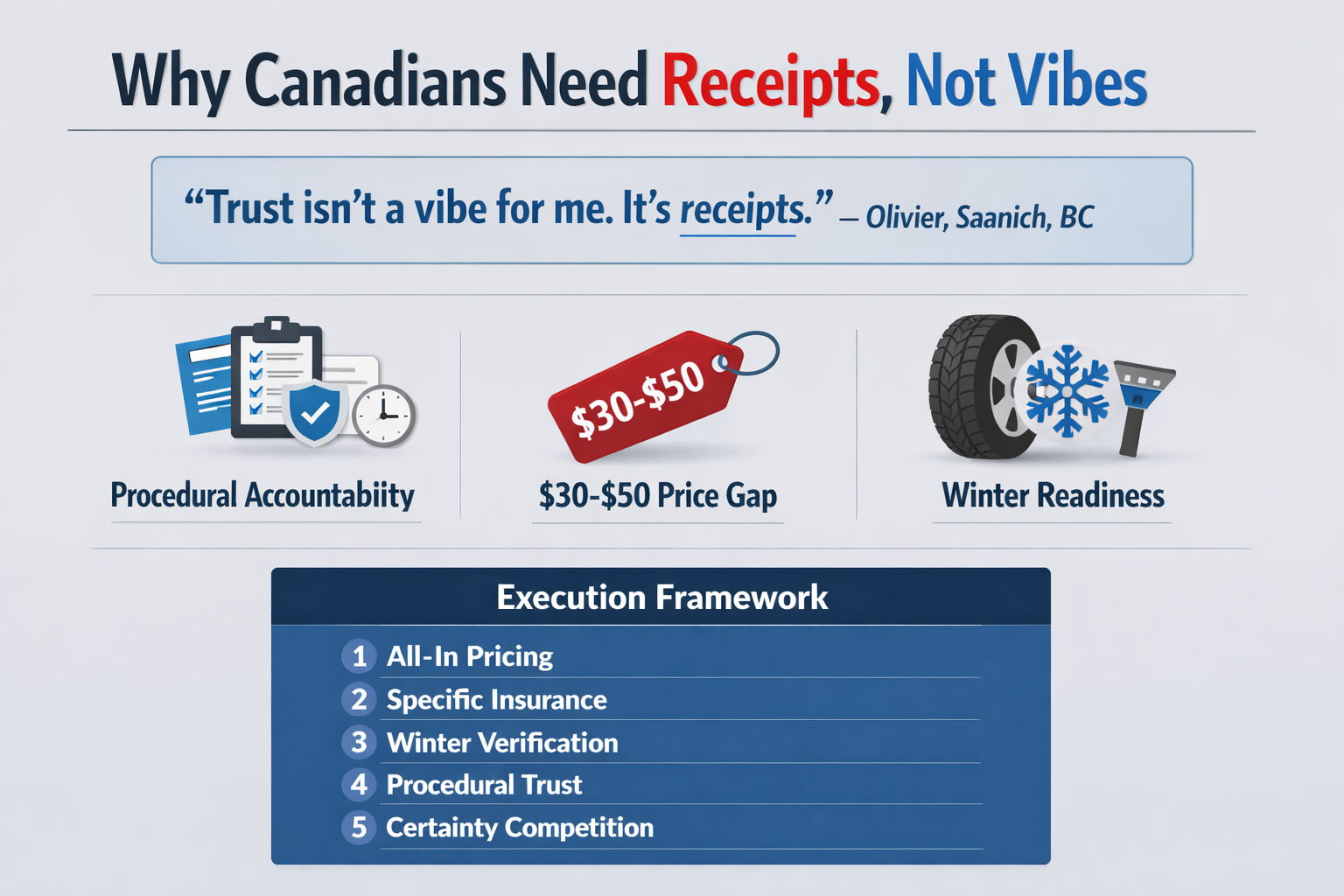
Three fundamental conversion pillars emerged clearly from this research: temperature integrity through visible cold chain management and strong guarantees, transparent pricing without hidden fees or surprise charges at checkout, and traceability through named farms and verifiable sourcing that consumers can independently research and verify. Nail those three fundamentals, and the convenience factor can finally win out over the anxiety that currently blocks purchase behaviour.
Because at the end of the day, nobody wants to gamble with food safety for their family and guests. Remove the gamble through operational transparency, strong guarantees, and visible cold chain documentation. Prove the quality through verifiable sourcing, named farms, and third-party certifications that consumers can independently verify. The market is ready and waiting to be captured by brands that take these legitimate consumer concerns seriously and address them directly with substantive operational commitments rather than marketing promises.
What the Research Revealed
We asked real consumers to share their thoughts. Here's what they told us:
If a meat delivery service let you build your own custom box (pick exactly what cuts you want) vs sending you a pre-set subscription box, which would you prefer and why? Does the flexibility feel empo
Owen Anderson, 38, Operations Specialist, Thompson, MB, Canada:
Custom box, every time. I plan meals and freezer space, so I want chuck for chili, pork belly or short ribs for Korean night, thighs over breasts, and a few steaks when there’s a decent price per pound. Pre-set boxes always sneak in cuts I won’t use fast enough, then I’m playing freezer Tetris at -17°C and cursing at mystery roasts. Subscriptions bug me anyway - I buy in a burst, label with a Sharpie, and run it down before I restock. The flexibility feels good, not overwhelming, as long as I can see exact weights and price per kg. Surprise boxes are for socks, not supper.
Alex Zhang, 35, Student Services/Program Coordination, Longueuil, QC, Canada:
Custom box. Every time. Pre-set boxes feel like paying to babysit random cuts I did not ask for, then playing freezer Tetris after work in the rain. Flexibility is empowering if I can pick exact cuts and see price per kilo, per pack, no mystery fees. If I cannot remove lamb shanks or swap out pricey ribeye for chicken thighs, that is fake choice and it annoys me. What I want from a custom build:
Clear price per kilo and final weight before checkout - no “market price” nonsense
Staples I actually cook: chicken thighs, pork shoulder, a bit of ground beef, maybe one small steak
Delivery window that does not make me burn a vacation day to meet a box
No subscription lock-in or upsells - let me order on-demand
Only time I’d accept a pre-set box is if it is the staples and the discount is real. Otherwise, let me choose and stop pretending surprise meat is a perk. What do you actually cook week to week, and how much freezer space do you have?
Olivier Martin, 32, Unemployed Adult, Saanich, BC, Canada:
Custom, every time. I plan around what I’ll actually cook - chicken thighs, a bit of salmon, maybe a small roast if friends are coming - so a pre-set box just bloats the freezer with cuts I won’t touch. I’ve done the promo box thing and ended up with two packs of stew beef haunting the back corner until March chili season... not proud of that. The flexibility feels good if the interface is clean: clear weights, real per-pack pricing, no surprise upsells, and a sane delivery window. If it’s a wall of tiny options and mystery portions, that’s just noise. And yeah, subscriptions make me twitchy - I don’t want a monthly parade of steaks showing up when I’m mostly cooking beans and veg. Let me build it when I need it, skip easily, and I’m happy.
Zoe Li, 36, Administrative Assistant, Grande Prairie, AB, Canada:
Custom box, no contest. I meal-plan and our freezer is small, so I want chicken thighs, ground, and stewing cuts I’ll actually cook, not a surprise ribeye I won’t touch on a Tuesday. Pre-set boxes always feel padded with sausages and bone-in bits to hit a price, which bugs me. The flexibility feels great if the pricing per kilo and weights are crystal clear and the interface is simple; if it’s a maze of upsells and mystery bundles, it’s just mental clutter and I’m out. Also, it’s -5°C and snowing here, so porch drops turn into soggy boxes and cat-curiosity theatre; if you can’t make the pick-your-own process straightforward, I’d rather buy exactly what I need at Superstore and collect PC points. Don’t make me play subscription roulette.
When a meat company says their products are "grass-fed, hormone-free, antibiotic-free, and locally sourced from Ontario farms" — does that make you MORE likely to buy, or does it sound like marketing
Olivier Martin, 32, Unemployed Adult, Saanich, BC, Canada:
Brutally honest: it reads like marketing until they show me receipts. “Grass-fed” without pasture details or “grass-finished” is mushy; “hormone-free” makes me roll my eyes because, for some meats here, that’s basically the default anyway; “antibiotic-free” can even set off a welfare red flag for me. And “locally sourced from Ontario farms” means nothing to me in Saanich - Ontario is not local from my kitchen window. If they name the farms, link a lot number I can check, and spell out certification or audits, I’ll listen; otherwise, after this week’s recall noise and grey skies, it’s fridge-magnet slogans to me.
Matthew Turner, 33, Unemployed Adult, Guelph, ON, Canada:
Short answer: it makes me slightly more likely to buy, but I roll my eyes until they back it up. Maybe the drizzle today has me cranky, but a green label with a barn silhouette does nothing for me. Here’s how I read those lines:
Grass-fed - Fine, but is it grass-finished or grain-finished, and what happens in winter here in Ontario. Hay and silage count, so say it plainly.
Hormone-free - For chicken and pork up here that’s basically a given. So it reads like fluff.
Antibiotic-free - If it says “raised without antibiotics,” I take it more seriously. Just “antibiotic-free” could mean withdrawal periods. Words matter.
Locally sourced from Ontario farms - Name the farm, the town, maybe the processor. If it just says “Ontario farms,” I assume a broker and move on.
Do I believe it. Not on packaging alone. I want specifics I can point at - farm name, batch info, a real certification, or a human at the Guelph Farmers’ Market who can tell me which field the cattle were on last fall. Would I pay more if it checks out. Yeah, a bit. If it’s just buzzwords, I keep walking and grab something with actual details. Show me the farm, not a stock photo.
Owen Anderson, 38, Operations Specialist, Thompson, MB, Canada:
Short answer: slightly more likely if they can back it up. Most days it reads like packaging fluff to me. Here’s how it lands in my cart, standing in front of the Co-op cooler at -17 outside:
Grass-fed - If it doesn’t say 100% grass-fed and finished, I assume it’s marketing wallpaper. I want feed details, not a vibe.
Hormone-free - I eye-roll unless they spell out species and what they actually mean. Feels like a label made to calm city folks.
Antibiotic-free - Squishy term. If there isn’t a specific program logo or audit number, I treat it as spin.
“Locally sourced from Ontario farms” - Not local to Thompson by any stretch. That’s Toronto-local. Up here it’s just a map sticker.
Do I believe the claims? Only when there’s something I can verify right on the package - farm name, a cert I recognize, batch info, processor listed. Otherwise it’s nice copy with a premium price tag. Would it make me buy? Maybe, if the meat itself looks solid and the price isn’t goofy. But I’m not paying extra for a paragraph of adjectives. Show me the farm or spare me the sermon.
Zoe Li, 36, Administrative Assistant, Grande Prairie, AB, Canada:
Short answer: mostly buzzwords. From Grande Prairie, “locally sourced from Ontario farms” does not land. Ontario is not local to me, so that line actually makes me less likely to buy. - “Grass-fed”: I read it as pricier and usually leaner. Sometimes good, sometimes just tougher. If the premium is more than about $4 to $5 per kg over regular Alberta AA/AAA, I’m out. - “Hormone-free”: I roll my eyes. Every animal has hormones. That phrasing feels like pure packaging fluff. - “Antibiotic-free”: I half-believe it, but I also wonder what they mean by it. If they do not spell out the practice clearly, I assume it is marketing trying to soothe me. What makes me actually trust it: name the farm, show the province, give a packed-on date, and keep the price within shouting distance of standard Alberta beef. A QR code to a batch page helps, but only if it shows real details, not a glossy story. Would I buy it? If it is Ontario “local,” probably not. If it is genuinely Alberta or even Peace Country and the premium is small, maybe, especially if the marbling looks right. If it is an $8 per kg markup and a pile of fancy claims with no specifics, hard pass. If there are 4,000 PC Optimum points and the meat looks fresh, I might cave once, but I’m not loyal to labels that read like a billboard.
Be honest: what is your gut reaction to ordering meat ONLINE and having it delivered to your door? Does it feel trustworthy, risky, convenient, or weird? What would make you hesitate?
Andrew S. Campbell, 40, Community Volunteer, Thompson, MB, Canada:
Gut reaction? Weird first, then risky, and only maybe convenient when it's -20 and my porch is basically a walk-in freezer. I like seeing the cut, the fat cap, the colour. Hard to trust glossy website photos, and if a box takes the scenic route to Thompson, you’re playing thaw roulette. Winter, I’d consider it. July, not a chance. What makes me hesitate:
Shipping to the North: delays, mystery couriers, and boxes that show up at 7 p.m. after a tour of the Prairies.
Price per pound: lots of hype, then you do the math and you’re paying steak money for stew meat.
Packaging: mountains of plastic and dry ice, or worse, vacuum seals popped and ice crystals starting. Hard pass.
Vague sourcing: if I can’t tell where it’s from, how it was raised, and when it was packed, I’m out.
Minimum orders and subscriptions: I don’t need a mystery box of meat every month like it’s Christmas for carnivores.
If I’m stocking up, I’d sooner drive to a butcher in Winnipeg, pack coolers, and know exactly what I’m getting. Online could work in deep winter for a one-off, but trust has to be earned, not packaged in foam with a smiley sticker.
Matthew Turner, 33, Unemployed Adult, Guelph, ON, Canada:
Gut reaction? Weird first, then convenient if it proves itself. A box of steaks sweating on the porch while it rains like today just makes me clench my jaw. I like seeing the cut at the Guelph market, talking to the butcher. Online feels a bit trust me, bro. What makes me hesitate:
Cold chain worries - delays, box sitting in the wet, summer heat. Winter is basically free refrigeration, but still.
Price creep - shipping, minimum orders, surprise fees. Per-pound math can get sketchy fast.
Subscriptions - hard no. I don’t need a monthly meat calendar.
Packaging waste - foam coolers, oceans of plastic. Bugs me.
Cross-border nonsense - I’m not dealing with brokerage or US-only cuts that take a week.
Freezer space - I don’t want to play Tetris with a half-cow in my little freezer.
Local Ontario farm or butcher, clear sourcing, no fluff.
Overnight or same-day with a tight delivery window and a text when it lands.
Rock-solid cold packaging and a no-questions refund if anything shows up soft.
Transparent per-pound pricing with tax and shipping upfront. No bundles I don’t want.
No subscription, just pick what I want. Pickup option is nice too.
So yeah, I’d do it if it felt like buying from my butcher but with a van. Otherwise I’ll keep grabbing ribeyes at the market and avoid the porch-meat roulette. Turbo would probably try to claim the box anyway.
Owen Anderson, 38, Operations Specialist, Thompson, MB, Canada:
Gut reaction: convenient idea, risky in the North. Not exactly weird, just hard to trust. In January at -17C, the porch is basically a free freezer, but the risk is the middle of the trip where someone cheaped out on dry ice or it sits in a depot over a weekend. I hate paying steakhouse prices for a mystery box I can’t poke at. What makes me hesitate:
Shipping to Thompson - delays, Friday ship-outs that die in a warehouse, and “northern surcharge” nonsense.
Cold chain - no proof it stayed cold the whole way. Half-thawed chicken gives me the ick.
Price creep - per-pound looks fine until you add packaging and delivery. Hard pass if it beats the Co-op by 40%.
Packaging waste - giant foam coolers and gel packs I can’t reuse. Annoying.
Subscriptions - I’m not marrying a meat box.
Control - I like picking cuts. If I can’t see the marbling, I’m not paying premium.
Cold-chain proof - clear temp guarantee or a simple logger, and a no-questions refund if it’s warm.
Northern logistics spelled out - ship early week only, no weekend sits, firm delivery window here.
Straight pricing - shipped total upfront, no hidden fees.
Real cuts I want - brisket, flank, and thin-slice options for bulgogi. No filler.
Local-ish credibility - reviews from folks north of the Perimeter, not Toronto condos.
So yeah, I’m interested but cagey. January helps. July terrifies. If they can prove the cold chain and not ding me on northern fees, I’d try a one-off box. Otherwise, I’ll keep eyeballing steaks at the Co-op and grilling with the lid down like a sane person.
Alex Zhang, 35, Student Services/Program Coordination, Longueuil, QC, Canada:
Gut reaction: kind of weird and risky. Convenience is real, but my brain goes straight to cold chain and who eats the loss if it shows up half-thawed on a rainy, gusty day like today.
Temperature control - July heat or a courier delay and I start picturing mushy chicken.
Delivery window chaos - condo buzzer misses, porch drops, and me at work.
Can’t eyeball the cut - I want to see marbling, color, and moisture, not a glam photo.
Price creep - shipping, packaging fees, and the surprise subscription nudge. Hard pass.
Packaging waste - gel packs and foam stacking up in the closet like guilt.
Refund pain - returning bad meat is basically impossible. Who trusts that process?
Data grab - yet another account holding my card for… pork chops.
If I cannot smell or at least size it up, I’m not paying premium for a mystery box. Maybe I’d try it if a friend I trust swore by a local outfit with tight 2-hour delivery, but default is skeptical. What’s pushing you toward it - specific cuts, a deal, or no time to shop?