
The wellness app market is booming. Calm has 100+ million downloads. Headspace has celebrity partnerships and corporate deals. The category is validated.
But here's the uncomfortable truth product teams know: most users try the free trial, get a "tiny burst of calm," and churn before the first charge.
We asked 6 US consumers to be brutally honest about their meditation app experiences. What made them try. What made them stop. And what would actually get them to pay.
Finding #1: The Trial-to-Churn Pattern Is Universal
Every participant had tried a meditation app. None had stuck with it.
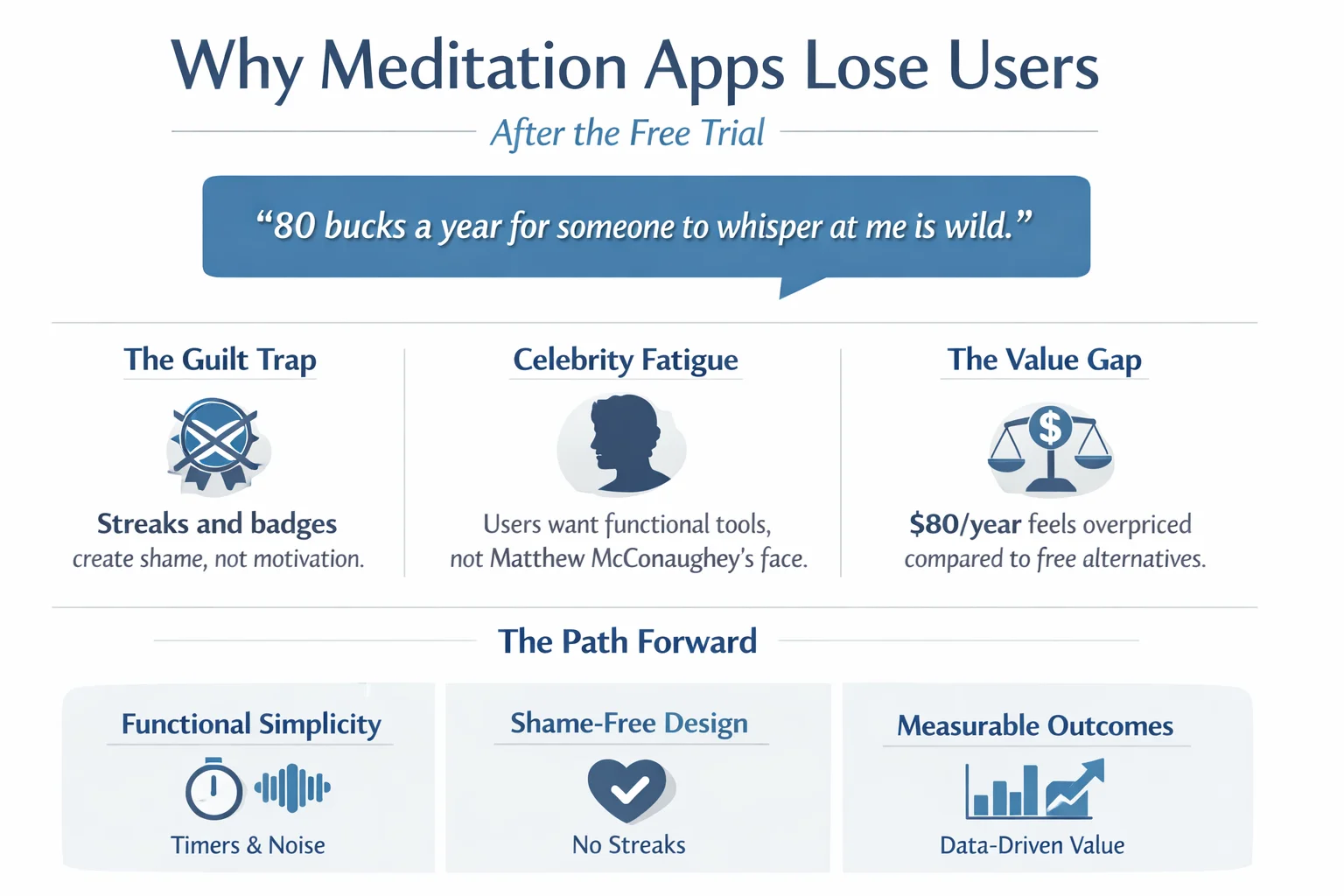
"I used the free trial, got a tiny burst of calm for like a week, then I fell off and canceled before it charged me," one participant told us. "I'm not great with streaks, and those little badges make me feel scolded when I skip."
The gamification features designed to drive engagement are backfiring. Streaks and badges create guilt, not motivation. When users miss a day, they feel judged by the app — and that shame drives them away rather than back.
Finding #2: Celebrity Content Backfires
Calm has invested heavily in celebrity Sleep Stories — bedtime stories narrated by Matthew McConaughey, Harry Styles, and others. It's a key differentiator and marketing hook.
Consumers are not impressed.
"The celeb angle makes me LESS interested, not more," one participant said. "If I want calm, I don't want to picture Matthew McConaughey's face."
Another was blunter about guided meditations in general: "Whispery, floaty talk makes my skin crawl. I'm already on edge. A soft voice telling me to breathe makes me want to punch a wall."
Finding #3: $80/Year Is a Hard Sell
We asked about pricing. The consensus was brutal.
"80 bucks a year for someone to whisper at me is wild," one participant said. "I tried the trial, bailed, and my free breathing timer plus a brown noise MP3 works better."
Another: "At that price I'd rather buy a used tool or stack pantry beans. I don't see how it's worth more than Spotify."
The value perception problem is stark: consumers see meditation apps as premium-priced content that competes with free alternatives (YouTube, breathing timers, white noise). Unless the app delivers measurable, tangible value beyond "calm," the price feels unjustified.
What Would Actually Work?
When we probed for what WOULD make a wellness subscription worth it, themes emerged:
1. Simple tools over guided content — Breathing timers, brown noise, sleep sounds. No talking. No celebrities. Just functional tools.
2. Shame-free design — No streaks that guilt you. No badges that scold. Just available when you need it, invisible when you don't.
3. Measurable outcomes — If I could SEE my sleep improving or stress decreasing with data, that would justify the price. Abstract "calm" isn't enough.
The Bottom Line
Meditation apps have a product-market fit problem disguised as a retention problem. Users try them in moments of stress, get temporary relief, but don't integrate them into daily life. The features designed to drive engagement (streaks, badges, celebrity content) are actively pushing users away.
The path forward isn't more content or bigger celebrities. It's simpler tools, shame-free design, and measurable value.
Test Your Own Product Assumptions
This study took about 15 minutes. If you're building product features and want to know what users actually think before you ship, Ditto can help.