The supplement aisle is drowning in collagen. Every brand has it now. So what makes one collagen supplement worth buying over another?
I ran a study with 6 American consumers to understand how they navigate the crowded supplement market. The findings reveal a trust crisis that goes deeper than ingredients.
The Participants
Six health-conscious Americans aged 28-55. Regular supplement buyers who've experimented with collagen, protein powders, and wellness products. They're informed enough to be skeptical.
The Collagen Commoditisation Problem
Collagen used to be a differentiator. Now it's everywhere.
Every brand has collagen now. What makes one better than another?
This question came up repeatedly. The category has grown so fast that consumers genuinely can't distinguish between products. Ingredient claims that once felt premium now feel generic.
Key insight: When every brand claims the same benefits, no brand stands out. Collagen has become a commodity.
The Celebrity Doctor Paradox
Founder association cuts both ways. Having a recognisable face can build trust or destroy it.
I trust his recommendations. But also, celebrity doctors make me skeptical.
This tension appeared across multiple responses. Consumers want credibility, but they've been burned by celebrity endorsements that prioritise marketing over substance. The Dr. Axe association helps some buyers and alienates others.
What builds trust isn't fame. It's transparency.
I want to know where this stuff comes from. Transparency builds trust.
Key insight: Founder stories help when they demonstrate expertise and transparency. They hurt when they feel like celebrity endorsement.
Sourcing Stories Beat Ingredient Lists
An unexpected finding: consumers care more about where ingredients come from than what the ingredients are.
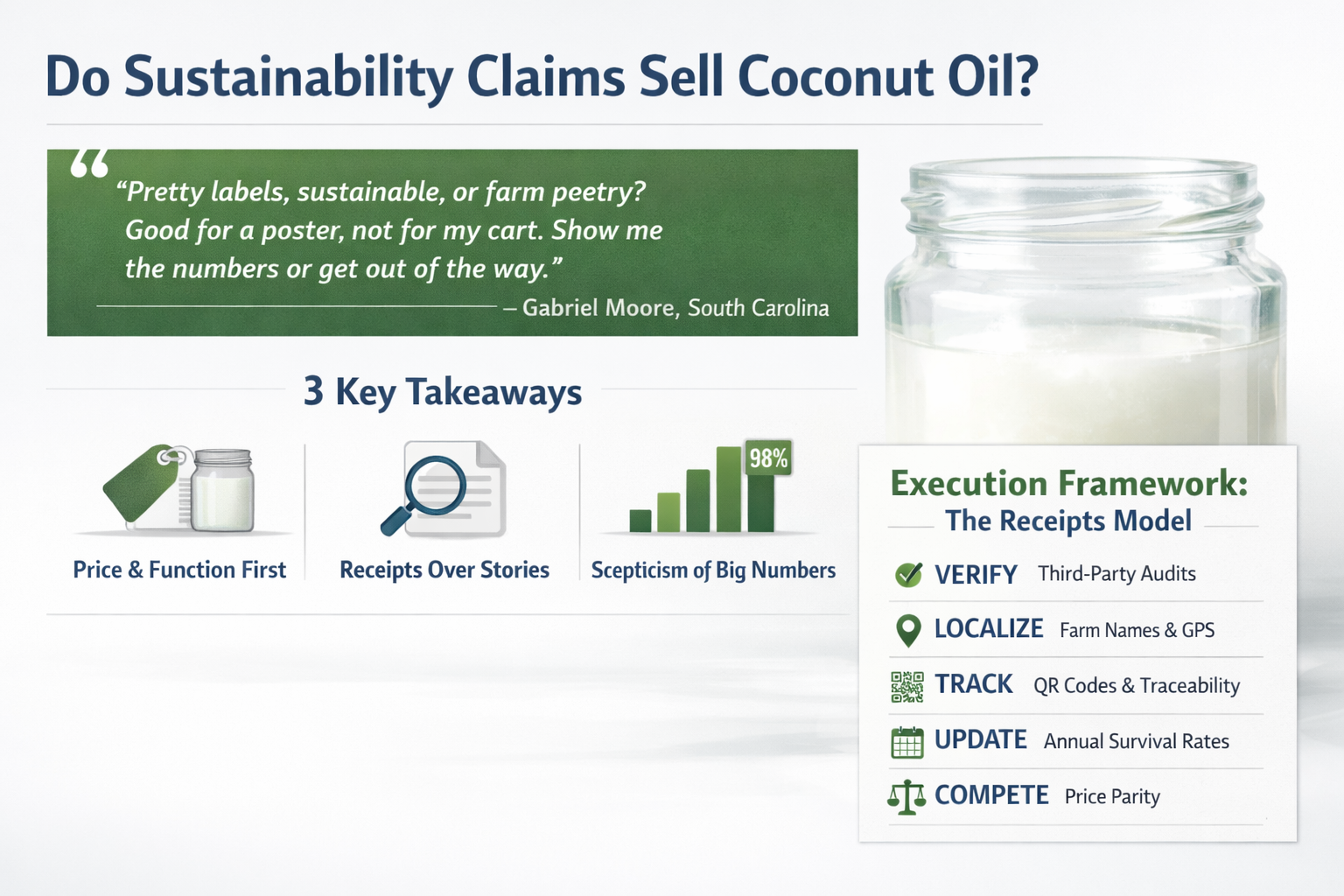
Show me the farm. Show me the process. That matters more than another claim about bioavailability.
The supplement industry has trained consumers to be skeptical of claims. What cuts through that skepticism isn't more claims. It's proof.
Where are the ingredients sourced?
What's the manufacturing process?
Can you trace the supply chain?
Are there third-party certifications?
Key insight: Provenance beats potency. Consumers trust what they can verify.
What This Means for Supplement Brands
Differentiate beyond ingredients. When everyone has collagen, collagen isn't a differentiator.
Show the supply chain. Sourcing stories build trust that ingredient claims can't.
Be careful with founder positioning. Expertise sells. Celebrity doesn't.
Invest in third-party verification. Claims are ignored. Certifications are trusted.
The Bottom Line
The supplement market has a credibility problem. Too many brands have made too many claims, and consumers have learned to tune them out. The opportunity isn't in making bigger claims. It's in proving smaller ones.
Brands that can demonstrate transparency, trace their supply chain, and let consumers verify claims for themselves will win the trust that ingredient lists can't buy.
Want to test your supplement positioning with real consumers? Ditto lets you run studies like this in hours, not weeks. Book a demo at askditto.io.
What the Research Revealed
We asked real consumers to share their thoughts. Here's what they told us:
Collagen supplements have become popular recently. Do you view them as legitimate or more of a fad? What would convince you to try collagen or bone broth supplements?
Michael Salcido, 40, Facilities Manager, Rock Hill, SC, USA:
Short answer: mostly fad with a small legit lane. Collagen as a protein is fine, but the glowing skin-joint-miracle talk is overcooked. Price-per-gram usually stinks compared to plain protein, and bone broth powders feel like expensive soup dust. On a cold, gray day like this, I’d rather make caldo in the Instant Pot than pay for fancy tubs. What would get me to try it: If I did test it, I’d run it 6-8 weeks during a heavier kettlebell cycle and track knee and back notes. If it moves the needle, cool. If not, back to caldo and a normal protein scoop. But yeah, we’ll figure it out.
Brian Vera, 39, Sales Manager, Alexandria, VA, USA:
Mostly fad with a narrow legit lane. Feels like overpriced protein wrapped in influencer sparkle. If my knee keeps barking after futsal in this gray, chilly mess, I’d test it for joints, not for “glow.” Comfort-wise, bone broth is caldo de res to me - great on a cold day, not a miracle. What would actually get me to try it: Until a brand hits those marks, I’ll stick to actual protein and abuela-level broth at home. Save the hype for someone’s reels.
Cassandra Guebara, 44, Compliance Analyst, Rural, TX, USA:
Short version: collagen feels mostly fad to me... glossy jars selling hope. If it helps you, bendito, but for me it reads like pricey protein. I’d rather do caldo de pollo on Sunday and put my money where I can see results. Maybe I’d test it, but only with guardrails. What would actually move me: If it checks those boxes and my notes show a real difference, fine. If not, cuento bonito no paga cuentas.
When a supplement brand talks about "ancient wisdom" or "traditional ingredients," do you find that compelling or does it feel like marketing speak? What would make you trust those claims?
Michael Salcido, 40, Facilities Manager, Rock Hill, SC, USA:
Mostly marketing speak. Slap “ancient” on a shiny label and hope I don’t flip it over. This cold, gray stretch has me extra short on patience for fairy tales in gold script. I’ll trust it only if the story comes with receipts. What I need to see: If you want to sell me “ancient,” pair it with modern proof. Otherwise it’s kitchen stuff - I’ll put ginger in tea - not something I swallow from a capsule.
Cassandra Guebara, 44, Compliance Analyst, Rural, TX, USA:
Short answer: it mostly feels like marketing speak. I hear "ancient wisdom" and my eyes do a little roll, porque if I want tradición I’ll make té de manzanilla at home, not buy a mystical blend. I’ll listen if they pair the story with boring, verifiable details. Sin eso, hard pass. What would make me trust it: If it respects the tradition and shows lab-grade proof, I’ll consider it. Otherwise, cuento bonito no paga cuentas.
Jennifer Reaves, 54, Corporate Trainer, Rural, MS, USA:
Short answer: it mostly feels like marketing speak. When I see ancient wisdom with a sepia label and flowery copy, my guard goes up. I can listen, but only if they stop telling stories and show me receipts. What earns a little trust from me: If they cannot do that, I pass. Food first, sleep next, and if there is a bottle involved, it needs to be dull and honest.
When it comes to supplements, do you prefer brands that emphasize ancient or traditional ingredients versus modern scientifically-formulated supplements? Why?
Jennifer Reaves, 54, Corporate Trainer, Rural, MS, USA:
Short answer: I lean modern, but only the plain, boring kind. If a brand leads with ancient folklore and a sepia label, my guard goes up - it feels like marketing trying to sell me a story instead of clear labels and amounts that make sense. On the flip side, I do not trust flashy lab talk or proprietary blends either; that reads like pay-more-for-mystery. I buy very few supplements to begin with, and when I do, I want one or two straightforward ingredients, no auto-ship, no influencer promises. Food first, sleep next, and if a bottle is involved, I want it to be dull and honest, not iffy or romanticized.
Brian Vera, 39, Sales Manager, Alexandria, VA, USA:
Modern, science-forward. Save the “ancient secrets” for té de manzanilla at home when we want comfort, not outcomes. At home we still do ginger with honey, caldo, Vaporrub culture, all that. But if I’m paying supplement money, give me numbers or get out of my cart.
Michael Salcido, 40, Facilities Manager, Rock Hill, SC, USA:
Short version: I lean modern, science-first. The whole “ancient secret herb” pitch makes my eyes roll. Save the folklore for soup, not capsules. Why: I’m not anti-tradition. I’ll grate ginger in tea when I’m run down, and I’ll cook with turmeric or chiles all day. But as a supplement, I want the simple, standardized stuff. This cloudy, cold stretch has me sticking with basics I already know work for me - D in winter, magnesium at night for my cranky back, creatine when I’m pushing kettlebells, a plain protein. No gummies, no subscription traps. Bottom line: show me the label, show me mg per serving, and keep the fairy tales out of my pill bottle. If I need tradition, I’ll make caldo.