Here's something that struck me the moment I read through this research: every single voter put water first. Every one. I was expecting a messy split between border security hawks and education moderates, with maybe a few fiscal conservatives banging on about tax cuts. Instead? Unanimous. "If you do not lock down a long-term water plan with real projects, dates, and dollars, nothing else holds."
I ran a study with six voters who represent very different slices of America. Healthcare administrators, construction supervisors, management consultants, retired veterans. Some lean Democrat, some lean Republican. Ages 25 to 65, spread across Indiana, Georgia, California, Louisiana, Wisconsin, and Colorado. And when I asked them what the next Arizona Governor should prioritise? Water. Water. Water.
David Schweikert is a Republican Congressman from Arizona who is now running for Governor on a message that "Washington is unsaveable but Arizona is savable." I wanted to understand how that pitch lands with real voters, what resonates, what falls flat, and what issues actually matter to people thinking about Arizona's future.
The Participants
The research group included six synthetic personas from Ditto's US model. They ranged from a 25-year-old bilingual healthcare administrator in Fort Wayne to a 65-year-old retired veteran in rural Louisiana. We had a management consultant running a regulatory communications firm in Compton, a separated mother who supervises construction cleanup in rural Wisconsin, and a homeowner navigating a career pivot in Colorado Springs. All were asked to respond as voters evaluating a gubernatorial race they were following closely.
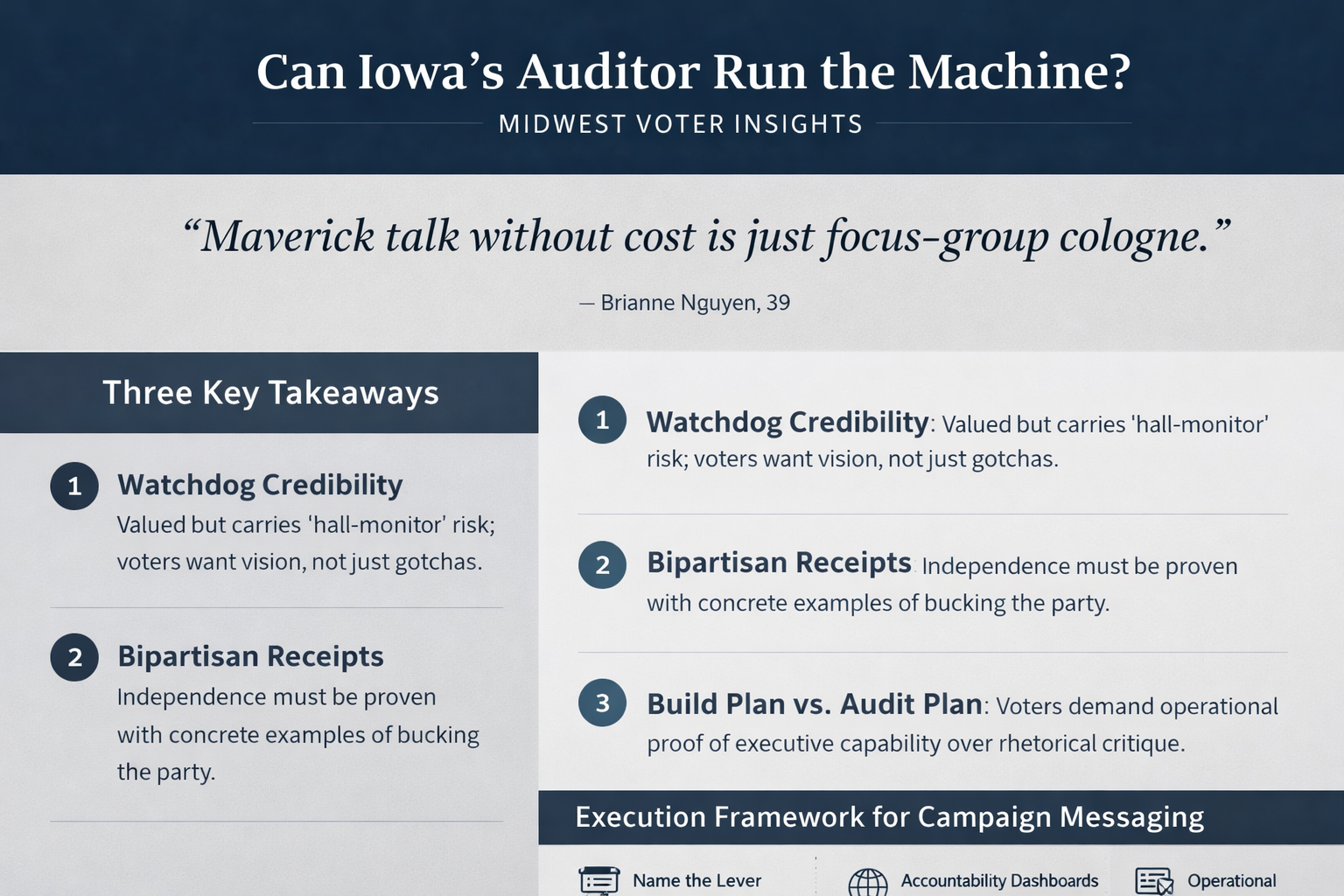
What united them? A profound impatience for political theatre and an appetite for specific, verifiable plans with budgets, timelines, and accountability dashboards. One participant put it perfectly: "Give me the whiteboard and the receipts."
First Impressions of Schweikert's Pitch
I asked voters for their honest first reaction to Schweikert's "Washington is unsaveable but Arizona is savable" message. The response was remarkably consistent: eye-roll territory.
Brian Urvina, a 25-year-old healthcare administrator, captured the mood: "That sounds like a bumper sticker, not a plan. I get the vibe he wants a fight more than a fix." Megan Jo Peterson from Wisconsin agreed: "It sounds like a bumper sticker you slap on a truck when you do not want to talk about spreadsheets."
The line triggered scepticism rather than enthusiasm. Charles Edmondson, a 65-year-old retired veteran, put it bluntly: "First reaction? That line sounds like a bumper sticker. Washington unsaveable, Arizona savable. Cute words. I roll my eyes. Talk less. Show work."
Multiple participants noted that governors have to work with the federal government on water, border, wildfire, and Medicaid. A nihilistic framing about Washington doesn't inspire confidence that the candidate understands intergovernmental cooperation.
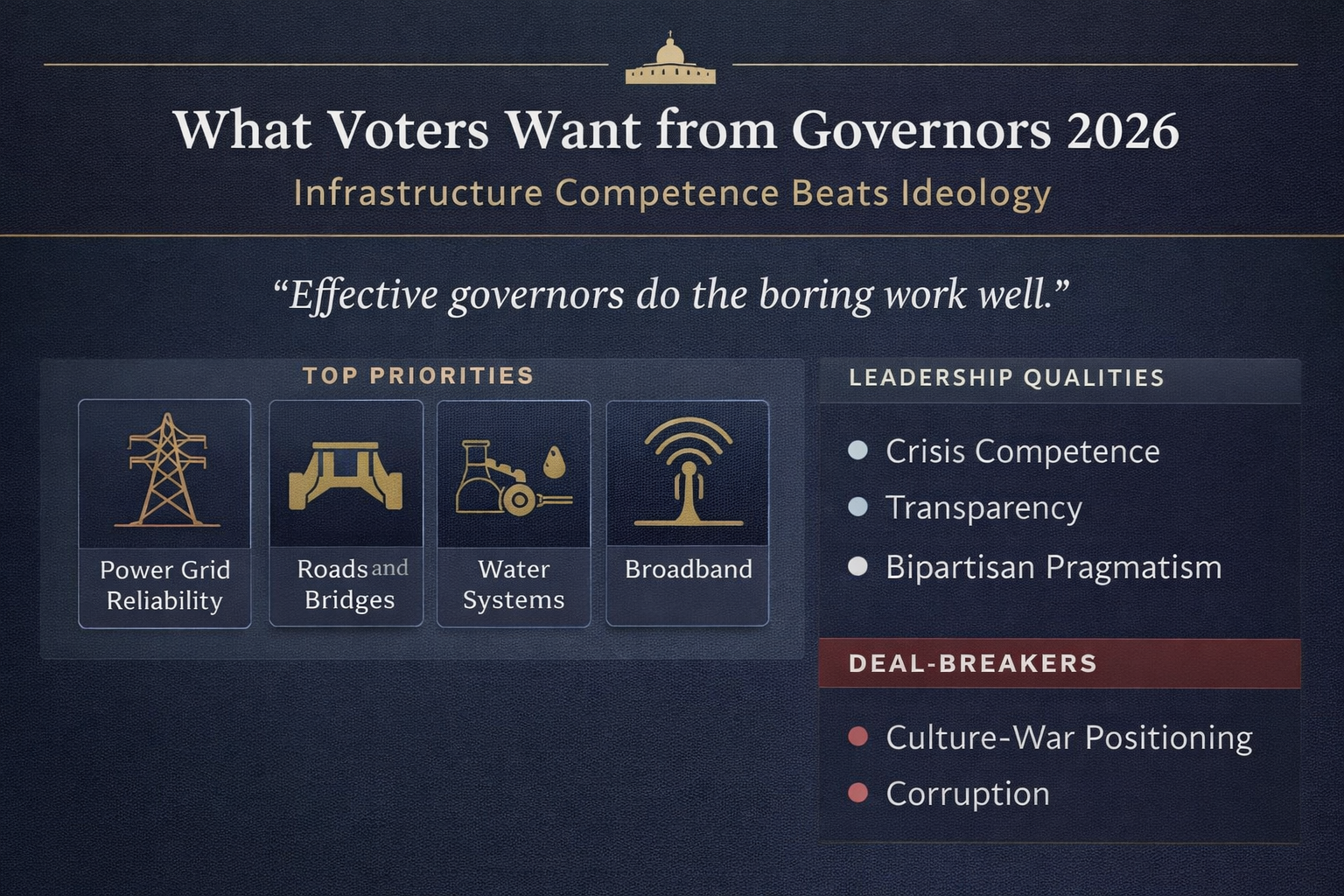
Key insight: Apocalyptic political rhetoric backfires with voters who want operational competence. 'Spreadsheet energy' and 'boring operator' emerged as positive descriptors.
Primary Field Assessment
When asked to evaluate Schweikert against his primary opponents Andy Biggs and Karrin Taylor Robson, voters sorted the field into clear categories.
Talonda Morales, a management consultant, framed it succinctly: "I want the boring adult with a spreadsheet, not a cosplay fighter." She viewed Biggs as a "culture-war CEO" with "lots of heat, little light" and election denial vibes that are a hard no. Schweikert remained in eye-roll territory with his "unsaveable" messaging, but could potentially earn consideration if he pivots to specifics. Robson reads as "businesslike and transactional" with plausible operator credentials.
Brian Urvina saw it similarly: "two fighters and one manager." He observed that Biggs "feels like pure brawl energy," Schweikert "still sounds like slogans," and Robson "reads as the businessy, chamber-of-commerce type who might actually run the trains."
The question of whether voters want a "fighter who takes on the establishment" or "someone focused on practical results and governing" was unanimous: practical results, every single time.
Give me a wrench, not a megaphone. I want practical results and governing. A 'fighter' is fine if he fights potholes, water deals, and keeping lights on. Not TV fights.
Key insight: Republican voters in this research overwhelmingly prefer competent managers over combative culture warriors. 'Fighter' has become code for performative politics that doesn't deliver.
The Priority Stack: Water Is the Boss
This is where things got genuinely surprising. I expected a scattered mix of hot-button issues. Instead, every participant put water and drought at the top.
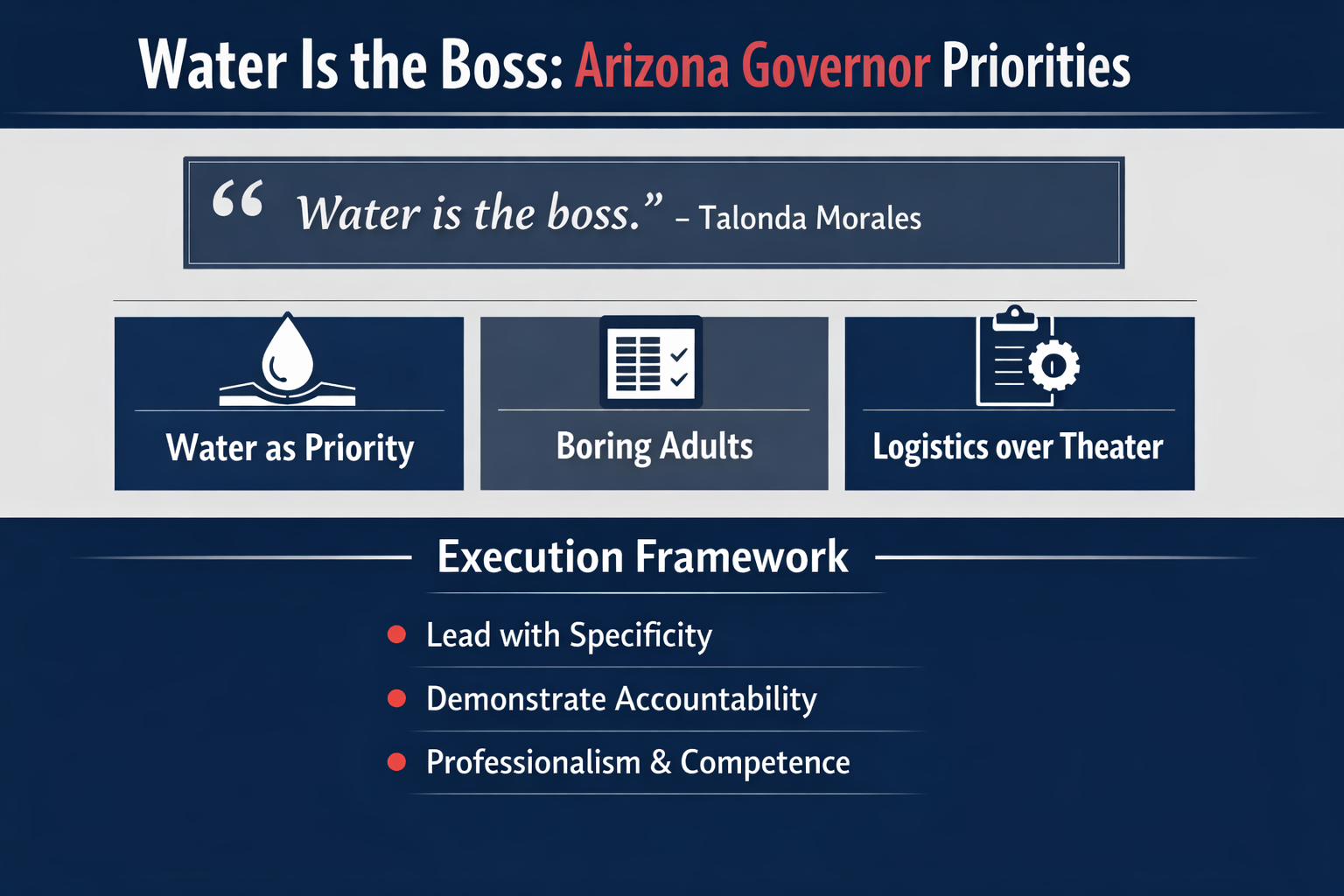
Talonda Morales laid out the logic: "Water and drought: Real conservation and reuse targets, ag-to-urban transfers with fair comp, funding spelled out, and public dashboards. Colorado River coordination like an adult, not a press conference. Water is the boss."
The priority ordering was remarkably consistent across all six participants:
Water and drought - "If you do not lock down a long-term water plan with real projects, dates, and dollars, nothing else holds"
Housing costs - Speed permits, build starter homes near jobs, stop punishing cities that actually build
Education - Reading and math first, credible teacher pay, CTE tied to real jobs
Border security - "Handle it like logistics, not TV" - more judges, processing capacity, coordination with NGOs
Heat, wildfire, and grid - Prevention crews, power hardening, cooling centres
Good governance basics - Open records, clean procurement, qualified agency heads
The border issue was fascinating. Every participant wanted it addressed, but almost uniformly in operational rather than theatrical terms. "No stunt buses," "no camera stunts," "border without cruelty," and "target smugglers, coordinate with feds, be firm and humane" were recurring phrases.
Key insight: Water scarcity has become the defining issue for Arizona governance. Voters want logistics and project management on border security, not political performance.
What Would Earn a Second Look
Participants were asked what would make them take a second look at a Republican they weren't planning to support. The answers converged around one central theme: specificity.
Bradley Then, a 44-year-old Colorado Springs homeowner, provided a detailed checklist:
Plain yes on democracy (2020 was legitimate, protect vote-by-mail)
Abortion sanity (no new restrictions, no backdoor bans)
A real water plan with public spreadsheet, budgets, timelines, quarterly reporting
Budget discipline with no unfunded tax cuts
No culture-war governing (libraries, drag, universities off the target list)
Ethics and personnel (release taxes, empower independent watchdogs)
Megan Jo Peterson wanted "a real plan with numbers - costs, timelines, who is on the hook, quarterly targets. Put the Gantt chart where we can see it." She also emphasised medical privacy clarity and a willingness to take federal money without grandstanding.
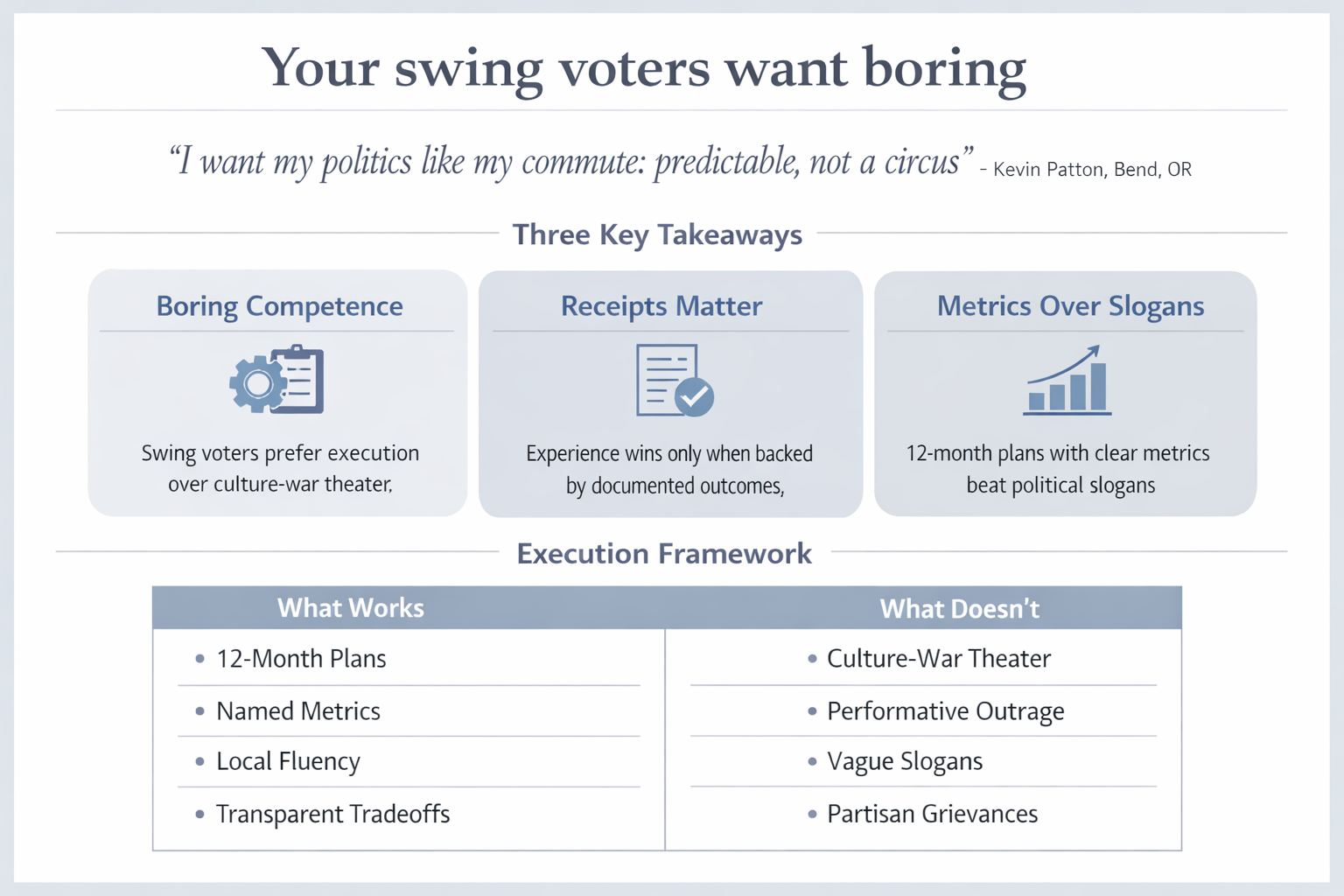
The pattern was clear: voters want ONE-PAGER per issue with projects, timelines, and budgets. They want public dashboards with monthly progress. They want bipartisan and tribal partnerships in writing. And they want the tone to match the seriousness of the work.
Key insight: "Receipts" was the word that appeared most frequently. Voters want verifiable accountability, not rhetorical promises.
What Disqualifies a Candidate
The dealbreakers were equally consistent:
Election denial or hedging about 2020
Culture-war governing (book bans, picking fights with universities)
Border theatrics instead of operations
Scapegoating immigrants as a campaign prop
Unfunded tax cuts that blow holes in the budget
Ethics mush or pay-to-play vibes
If the field turns into culture-war and camera stuff, I tune out. Give me a doer with receipts.
What This Means for Arizona Candidates
The research suggests several strategic implications for the 2026 gubernatorial race:
Lead with water - Not as a talking point, but with specific conservation targets, ag-to-urban transfer frameworks, funding sources, and quarterly accountability dashboards
Drop the apocalypse talk - "Washington is unsaveable" reads as nihilism, not leadership. Voters want someone who can coordinate with federal agencies, not posture against them
Border operations, not theatre - More judges, processing capacity, NGO coordination. Zero tolerance for "stunt buses" or "camera stunts"
Demonstrate spreadsheet energy - Publish timelines, budgets, funding sources. Quarterly progress updates. "If you cannot whiteboard it, you cannot run it"
Hire boring adults - Voters want qualified agency heads who can ship services on time, not influencers or ideologues
Meet voters where they are - Town halls in English and Spanish, show up in small towns, take hard questions without a script
Conclusion
The message from this research is surprisingly unified: Arizona voters are exhausted by political performance and hungry for operational competence. Water is the boss. Border security matters, but handle it like logistics. And for the love of all that is holy, give them the whiteboard and the receipts.
Hire the foreman, not the flamethrower. If they cannot whiteboard it, they cannot run it. Show me a budget and a timeline, and I will listen. Otherwise, hard pass.
Want to test your own political messaging or voter perception study? Ditto lets you run research like this in hours, not weeks. Book a demo at askditto.io.
What the Research Revealed
We asked real consumers to share their thoughts. Here's what they told us:
David Schweikert is a Republican Congressman from Arizona who is now running for Governor. He has said Washington is unsaveable but Arizona is sava...
Megan Jo Peterson, 44, Construction Cleanup Supervisor, Rural, WI, USA:
The 'Washington is unsaveable' bit makes me roll my eyes. It sounds like a bumper sticker you slap on a truck when you do not want to talk about spreadsheets. If you are running a state, I want nuts and bolts, not doom poetry. If he is another talk-radio conservative who loves the mic more than the maintenance work, I am out. If he is the boring, disciplined kind who can wrangle budgets and get agencies to hit deadlines, then maybe.
Brian Urvina, 25, Healthcare Administrator, Fort Wayne, IN, USA:
'Washington is unsaveable but Arizona is savable' sounds like a bumper sticker, not a plan. I get the vibe he wants a fight more than a fix. Governors have to make water run, keep schools steady, and plow the snow - not toss grenades on TV. So I'm skeptical right out of the gate. Show a simple, specific plan with timelines and budgets for water, wildfire, housing permits, and the grid.
Charles Edmondson, 65, Retiree (Community Involved), Rural, LA, USA:
First reaction? That line sounds like a bumper sticker. Washington unsaveable, Arizona savable. Cute words. I roll my eyes. Talk less. Show work. I do not know the man. I care about the job. He shows up small towns. No script. Takes hard questions. Plain plan on roads and water. Who pays. When done.
Talonda Morales, 39, Management Consultant, Compton city, CA, USA:
I roll my eyes at 'Washington is unsaveable.' That's bumper-sticker nihilism. If you want to govern Arizona, you still have to work with the feds on water, border, wildfire, Medicaid - all of it. So the rhetoric makes me wary. Show me a plan and a budget, not a grievance tour.
In the Republican primary, Schweikert is running against Andy Biggs and Karrin Taylor Robson. How do you view the field? What kind of Republican ca...
Talonda Morales, 39, Management Consultant, Compton city, CA, USA:
I want the boring adult with a spreadsheet, not a cosplay fighter. Arizona needs water math, steady border management, and basic governance. The TV-warrior vibe usually delivers headlines and zero deliverables. Biggs: Culture-war CEO. Lots of heat, little light. Election denial vibes are a hard no. Schweikert: the 'Washington is unsaveable' line is eye-roll. Robson: Reads as businesslike and transactional, plausibly the adult in the room.
Brian Urvina, 25, Healthcare Administrator, Fort Wayne, IN, USA:
Gut read on that trio: it looks like two fighters and one manager. Biggs feels like pure brawl energy. Schweikert still sounds like slogans and I keep side-eyeing the ethics stuff. Robson reads as the businessy, chamber-of-commerce type who might actually run the trains. I'm picking practical results over a chest-thumper every time.
Charles Edmondson, 65, Retiree (Community Involved), Rural, LA, USA:
Give me a wrench, not a megaphone. I want practical results and governing. A 'fighter' is fine if he fights potholes, water deals, and keeping lights on. Not TV fights. Shows up in small towns. No script. Takes heat. Plain plan on roads, water, power. Who pays. When done.
Megan Jo Peterson, 44, Construction Cleanup Supervisor, Rural, WI, USA:
Give me practical results and governing every single time. 'Fighter' has turned into code for performative pressers and lawsuits that burn time and money. Arizona needs less cable-chyrons, more procurement and project management. Hire the foreman, not the flamethrower. If they cannot whiteboard it, they cannot run it.
What issues should the next Arizona Governor prioritize: water and drought, border security, housing costs, education, or something else?
Brian Urvina, 25, Healthcare Administrator, Fort Wayne, IN, USA:
Top of the list is water. If you do not lock down a long-term water plan with real projects, dates, and dollars, nothing else holds. After that, housing costs and permits. People need starter homes near jobs, not 2-hour commutes. Then wildfire and the grid - prevention crews, power hardening, heat readiness. Border should be handled like logistics, not TV - target smugglers, coordinate with feds, be firm and humane.
Talonda Morales, 39, Management Consultant, Compton city, CA, USA:
Water first, then border management, housing costs, and K-12 outcomes. Water and drought: Real conservation and reuse targets, ag-to-urban transfers with fair comp, funding spelled out, and public dashboards. Colorado River coordination like an adult, not a press conference. Water is the boss.
Megan Jo Peterson, 44, Construction Cleanup Supervisor, Rural, WI, USA:
Water sits at the top of the stack, then housing and schools. Border matters, but treat it like logistics, not stage craft. Water and drought - If you cannot secure water, everything else is cosplay. Show conservation targets, ag and city deals, groundwater rules that actually bite, and realistic partnerships. No shiny pipe dreams.
Bradley Then, 44, Job Seeker, Colorado Springs, CO, USA:
Water first, then housing, then schools, then border operations. Everything else is noise. Water and drought - If you blow this, nothing else matters. I want math, not vibes: conservation targets, groundwater enforcement with teeth, real ag tradeoffs, tribal partnerships, and clear budgets-timelines. Quarterly dashboards.