Do Consumers Trust Adaptogen Supplements?
We asked 6 consumers about Moon Juice. Here's what they said....
Read StudyTag: Functional Foods
Functional foods promise benefits beyond basic nutrition, from energy boosts to cognitive enhancement. These studies explore how consumers evaluate these claims and what actually drives purchase decisions.
From mushroom coffee scepticism to energy bite stickiness problems, understand the gap between functional food marketing and genuine consumer adoption.
What You'll Discover
Discover what makes functional foods succeed or fail with consumers.
FAQ
Do consumers trust functional food claims?
Trust varies significantly by claim type and substantiation. Energy claims are widely accepted; cognitive and adaptogenic claims face more scepticism. Specific, believable benefits outperform vague wellness promises.
What barriers prevent functional food adoption?
Common barriers include taste compromise concerns, high prices, unfamiliarity with ingredients, scepticism about efficacy, and unclear usage occasions. Education and trial are critical.
How important is taste in functional foods?
Taste is non-negotiable for most consumers. Functional benefits cannot compensate for poor taste experience. Products that achieve both win; those forcing trade-offs typically fail at scale.
What functional food trends are growing?
Adaptogens, mushroom-based products, and gut health ingredients show strong growth. However, consumer education remains critical as many functional ingredients lack mainstream awareness.
We asked 6 consumers about Moon Juice. Here's what they said....
Read Study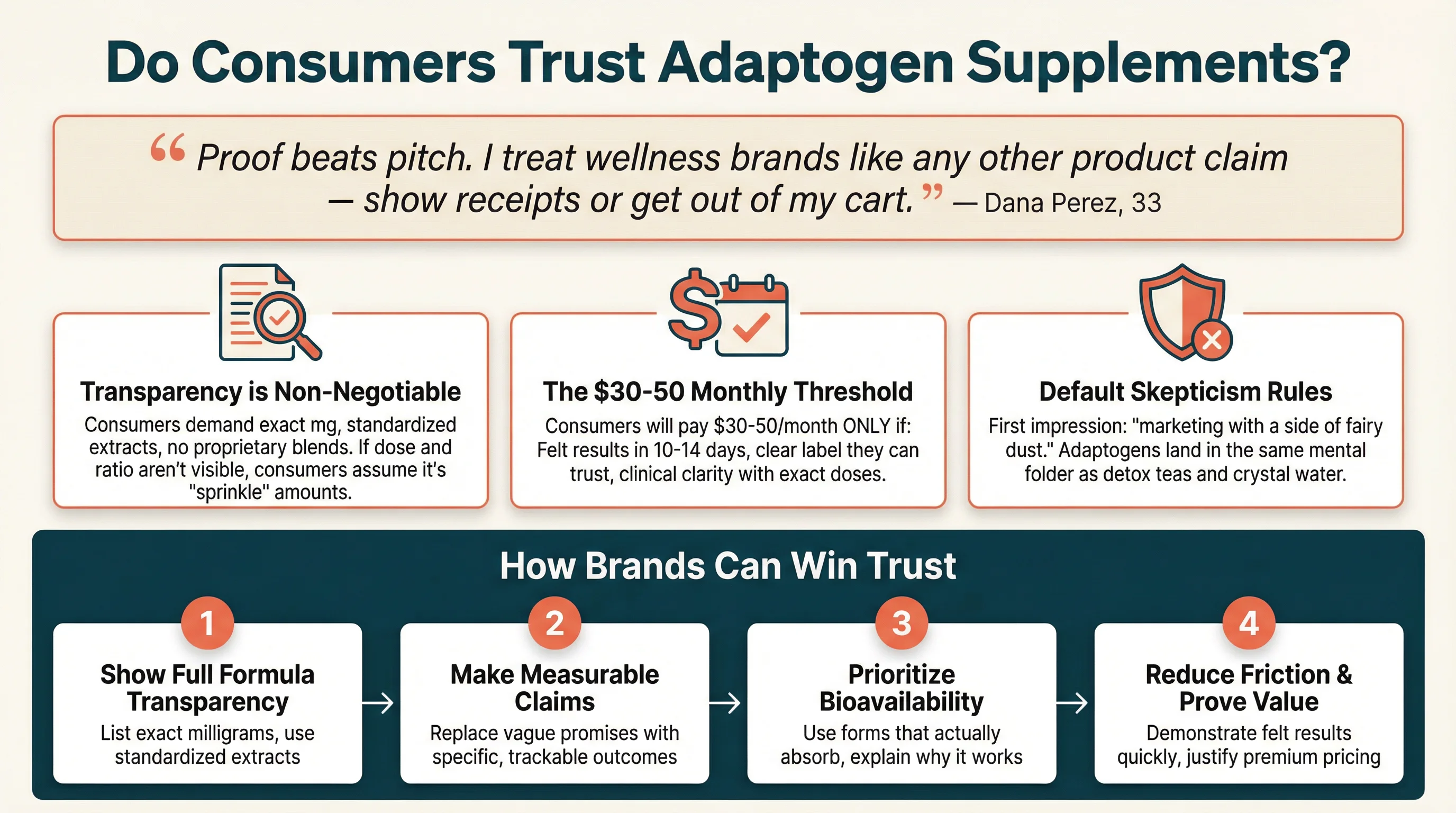
We asked 6 consumers about Moon Juice. Here's what they said....
Read Study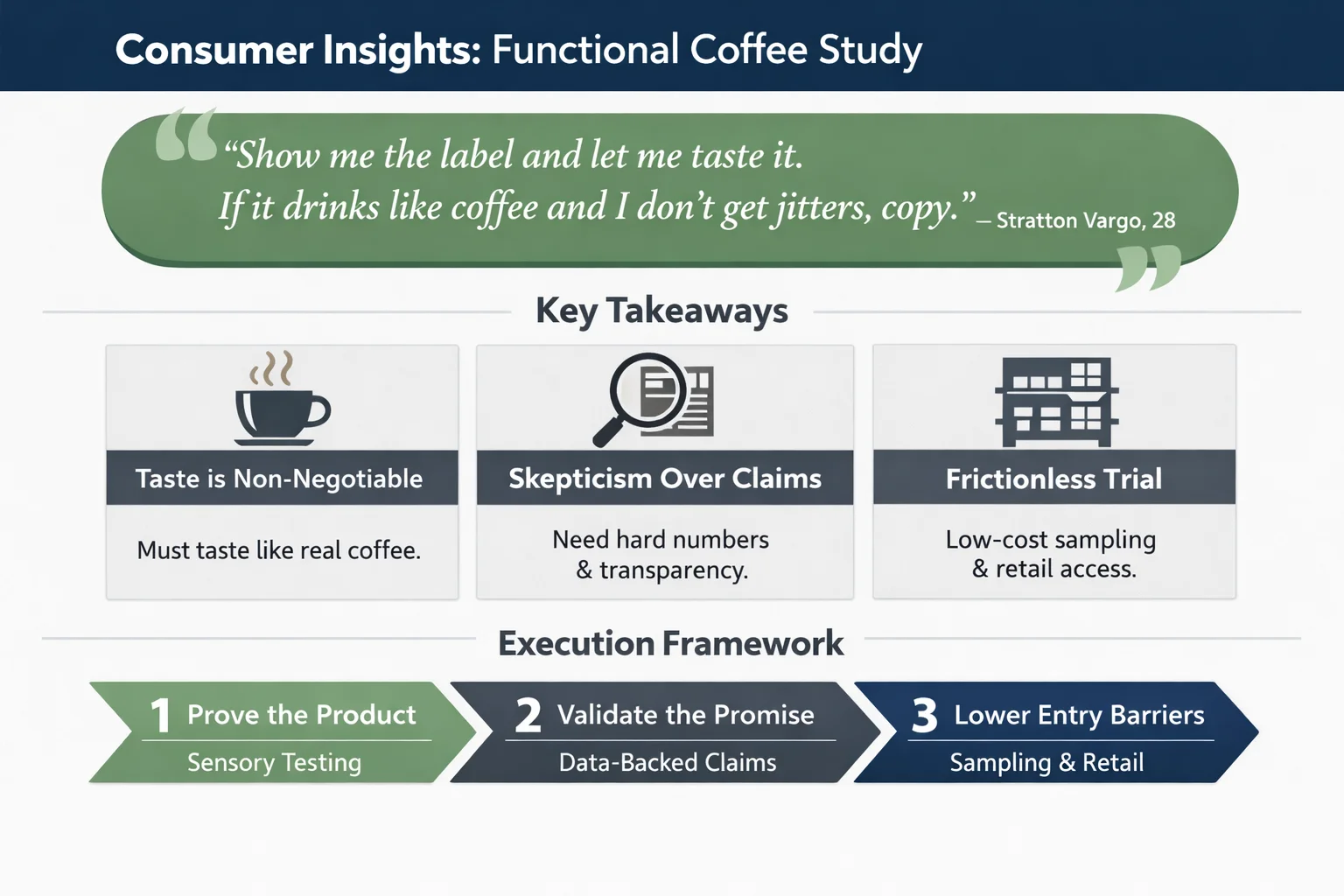
Sometimes the research confirms what you expect. Sometimes it surprises you. This was the latter....
Read Study